 The Discus | Discus Fish Care and Breeding Guide
How to Sex Discus and Wait for a Breeding Pair
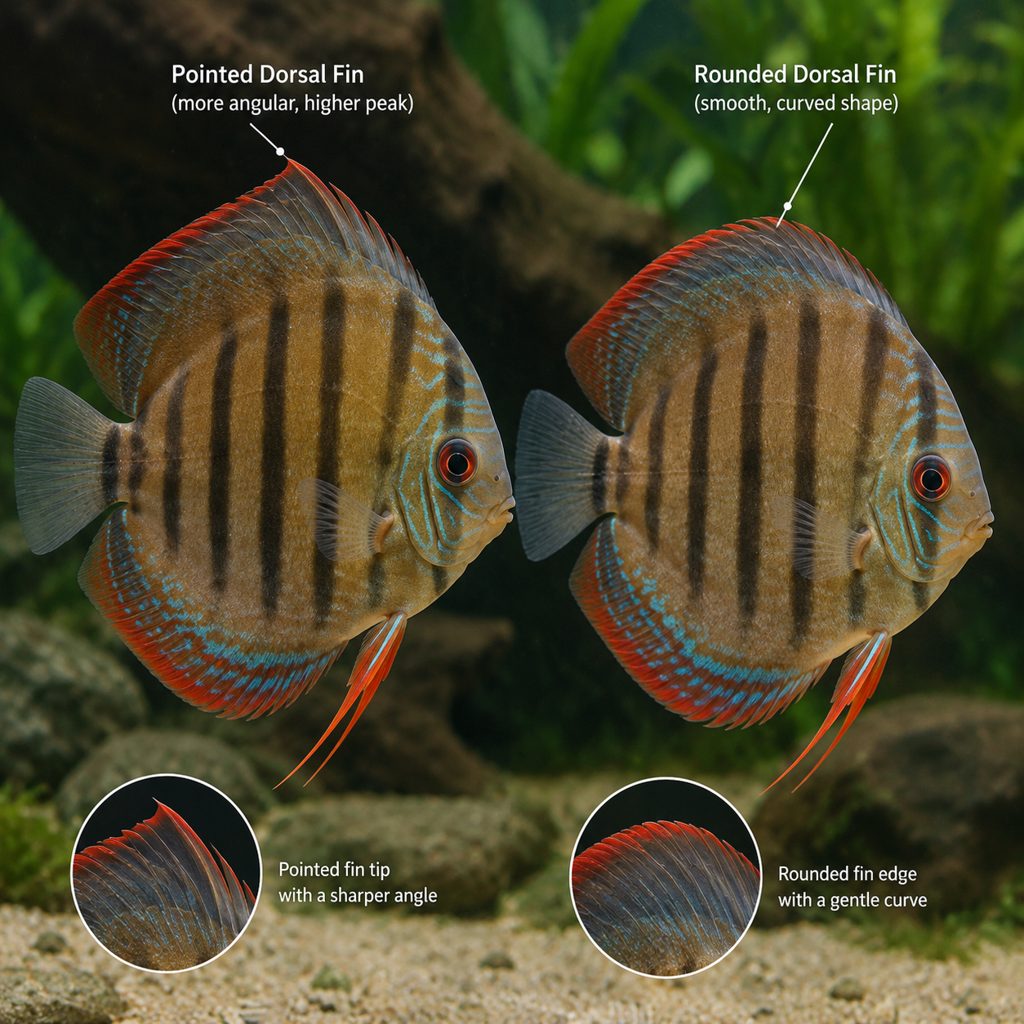
Trying to buy a male and female discus before they have spawned can be frustrating. Fin shape, body shape, and eye size may tempt you to guess, but those clues do not confirm sex. The clearest evidence comes during spawning, when the female’s ovipositor and the male’s genital papilla are visible. Discus typically reach sexual maturity at about 12–18 months, so certainty may take patience.
How much can appearance tell you?
Some keepers use the dorsal fin, body profile, or eye size as hints. Treat them as just that: hints. None is a dependable way to identify a male or female on its own. A seller’s description based only on appearance is not the same as a proven sex or spawning pair.
| Method | Reliability | What it tells you |
|---|---|---|
| Spawning behavior and reproductive structures | Conclusive | Visible during spawning |
| Dorsal fin shape | Suggestive only | Not enough to confirm sex |
| Body shape | Suggestive only | Not enough to confirm sex |
| Eye size | Suggestive only | Not enough to confirm sex |
The U.S.-oriented Aquarium Co-Op care guide mentions males and females in the context of group management: it recommends starting with similarly sized juveniles and rehoming aggressive fish as they mature. It does not offer a reliable sexing method. The market information reviewed also did not establish a U.S. standard for sellers to provide sexed fish or guaranteed pairs. Ask what evidence supports a seller’s claim rather than assuming that a young fish has been definitively sexed.
Spawning is the reliable confirmation
Near spawning, the female’s ovipositor becomes thicker and shorter, while the male’s genital papilla is narrower, pointed, and protruding. The pair may clean a spawning surface before laying eggs. If you see that behavior, observe the underside of the fish; the reproductive structures can identify which role each fish is taking. Spawning may follow within days once those signs appear.
That is useful for a breeder, but it comes late if you hoped to assemble a confirmed pair in advance. Until the fish spawn, the external clues remain uncertain. If you are considering a seller’s male/female designation, ask whether the fish have actually spawned and what basis the seller has for the identification. No verified price for a guaranteed male, female, or proven pair was found in the U.S. market information reviewed.
Give juveniles time to mature
Sexual maturity is usually reached at about 12–18 months. A juvenile may therefore be too young for the conclusive signs to appear. You can watch for body and fin clues as the fish grows, but avoid turning a guess into a certainty. Let the fish mature and observe their behavior.
Let a pair form naturally
A practical approach is to keep a group and allow a compatible pair to form. There is no guaranteed number of fish that produces a pair, and keeping several is a strategy rather than a promise. One spawn typically contains 100–400 eggs. Sometimes the keeper does not know which fish are male and female until the pair lays eggs.
A U.S. care guide’s advice to start with similarly sized juveniles also helps when planning a group. The same guide says aggressive fish may need to be rehomed as they mature, so keep watching group dynamics as well as breeding behavior. Our article on discus breeding basics, from pair selection to spawning covers the process, and our article on choosing and setting up a spawning cone explains the spawning site.
Frequently asked questions
Can I tell male and female discus apart by their fins?
Fin shape may offer a rough clue, but it is not a confirmation. Body shape and eye size are similarly unreliable. Spawning behavior and reproductive structures provide the conclusive evidence described here.
Should I buy a seller-labeled male/female pair?
Ask how the fish were identified and whether they have spawned together. The U.S. market information reviewed did not verify a standard sexed-pair market or a guaranteed-pair price. A label based only on appearance may be uncertain.
How many discus should I keep to get a pair?
There is no fixed number that guarantees pairing. Keeping a group and allowing a pair to form naturally is a common approach, but the fish may need 12–18 months to reach sexual maturity.
‹ Back to all articles