 The Discus | Discus Fish Care and Breeding Guide
Discus Size Labels Explained: What S, M, and L Really Mean
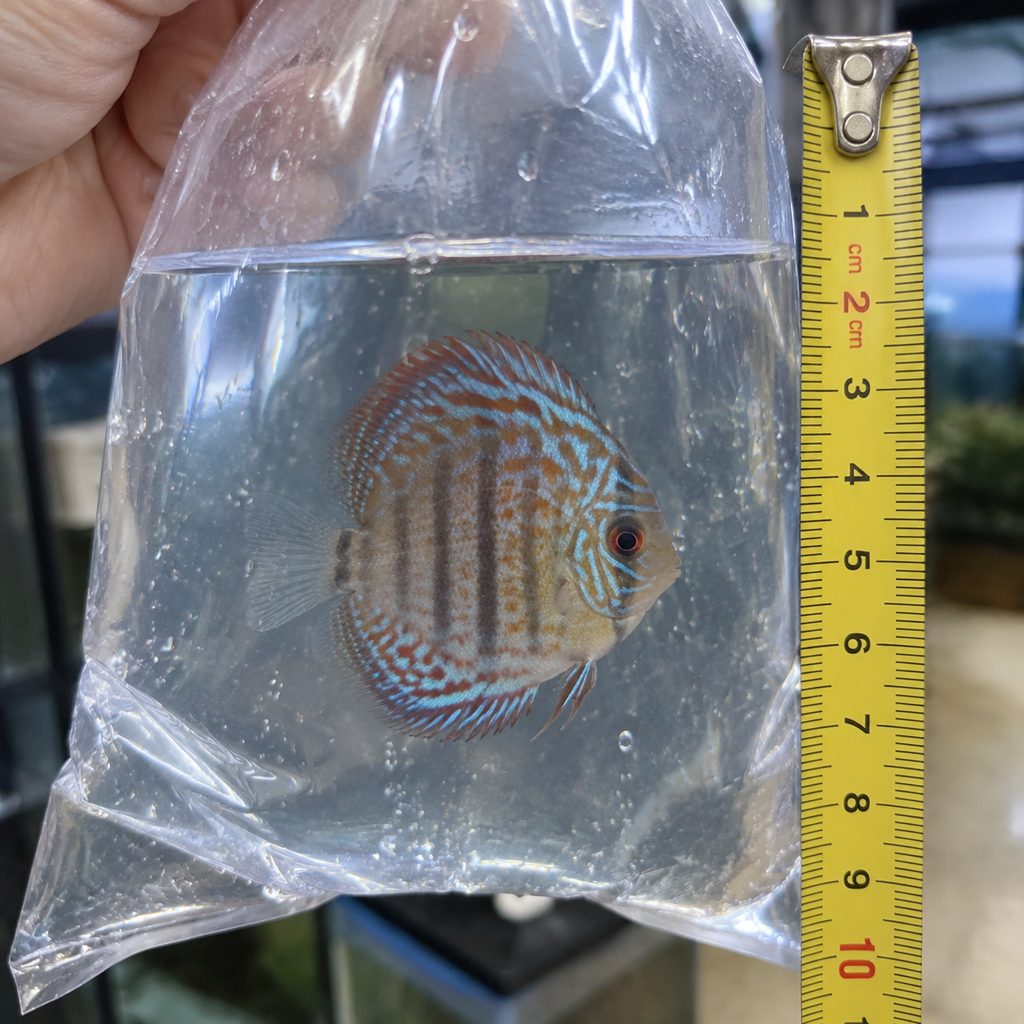
When you shop for discus, a listing marked S, M, or L may look like a quick way to compare fish. Those letters are not enough on their own. No common U.S. definition for the three grades—or a verified standard for measuring discus listings—was found in the market information reviewed. Ask the seller what the label means, how the fish was measured, and how old it is.
A U.S.-oriented Aquarium Co-Op care guide recommends starting with similarly sized juvenile discus, but it does not define S/M/L or say whether a listing measures body diameter or total length. So treat the size class as that seller’s description, not a universal grade. Ask for an actual measurement and compare fish using the same convention whenever possible.
Age and approximate body size
Age can add context to a measurement. The ranges below are general growth reference points, not a U.S. retail convention or a promise about an individual fish. Growth varies with feeding, water quality, genetics, and other care conditions.
| Age | Approximate size |
|---|---|
| 3 months | About 2 in (5 cm) |
| 6 months | 3.1–3.9 in (8–10 cm) |
| 12 months | 4.7–5.9 in (12–15 cm) |
Even fish of the same age can differ. At six months, one might be around 3.1 inches (8 cm), while another could be close to 3.9 inches (10 cm). Ask the seller where the measurement begins and ends; without a shared method, numbers from different shops may not be directly comparable. An age estimate is helpful context, but it does not certify health or past care.
Converting inches and centimeters
One inch equals 2.54 centimeters. The conversions below are arithmetic, not proof that U.S. sellers commonly use these particular inch grades. They can help you understand a listing or compare a seller’s stated size with metric reference information.
| Listing size | Metric equivalent |
|---|---|
| 2 in | About 5.1 cm |
| 3 in | About 7.6 cm |
| 4 in | About 10.2 cm |
| 5 in | About 12.7 cm |
A fish listed at 3 inches would be about 7.6 cm. That measurement might be close to a young juvenile, but it cannot establish age by itself. Confirm how the fish was measured and ask whether the age is known or estimated.
What to ask the seller
A local breeder, fish store, or online seller may be a place to source discus, but a letter grade does not tell you the fish’s full history. Use a few direct questions:
- What does your S, M, or L mean? Ask for the actual measurement range and whether it refers to body size or total length. No shared convention was verified, so get the shop’s definition in its own words.
- How old is the fish? Compare the answer with the approximate ranges above, but leave room for individual growth differences.
- What has it been eating? Continuing with familiar food can make the transition after purchase easier. Ask for the type of food and feeding routine.
- Are the juveniles similarly sized? A U.S. care guide recommends starting with similarly sized juveniles. If you are building a group, check size variation among the fish instead of relying on each one’s grade alone.
- What is its current condition and care history? A small fish is not automatically unhealthy, and a size label cannot explain why it is small. Look at the fish and discuss growth and feeding rather than assuming a cause.
Does the smallest grade save money?
There is no verified U.S. price schedule linking a discus size to a price, so an S label cannot be assumed to mean a particular discount. A small juvenile might cost less from one seller and not another. Compare the individual fish, its age, condition, and feeding history; do not choose on the size letter or price alone. Our article on why discus prices vary, from distribution to quality discusses the broader buying context.
Frequently asked questions
Does an S-size discus mean the same thing at every U.S. shop?
No shared S/M/L definition was verified. Ask each seller for the actual measurement and how they use that grade. A U.S. care guide recommends similarly sized juveniles but does not define retail size classes.
Will every 12-month-old discus measure 4.7–5.9 inches (12–15 cm)?
No. That is an approximate reference range, not a guaranteed size. Growth varies, and measurement methods can differ.
How do I compare an online listing in inches with a metric measurement?
Multiply inches by 2.54 to get centimeters. For example, 3 inches is about 7.6 cm. Ask how the seller measured the fish before comparing it with another listing.
‹ Back to all articles