 The Discus | Discus Fish Care and Breeding Guide
Heckel Discus: Blackwater Origins and Keeping Challenges
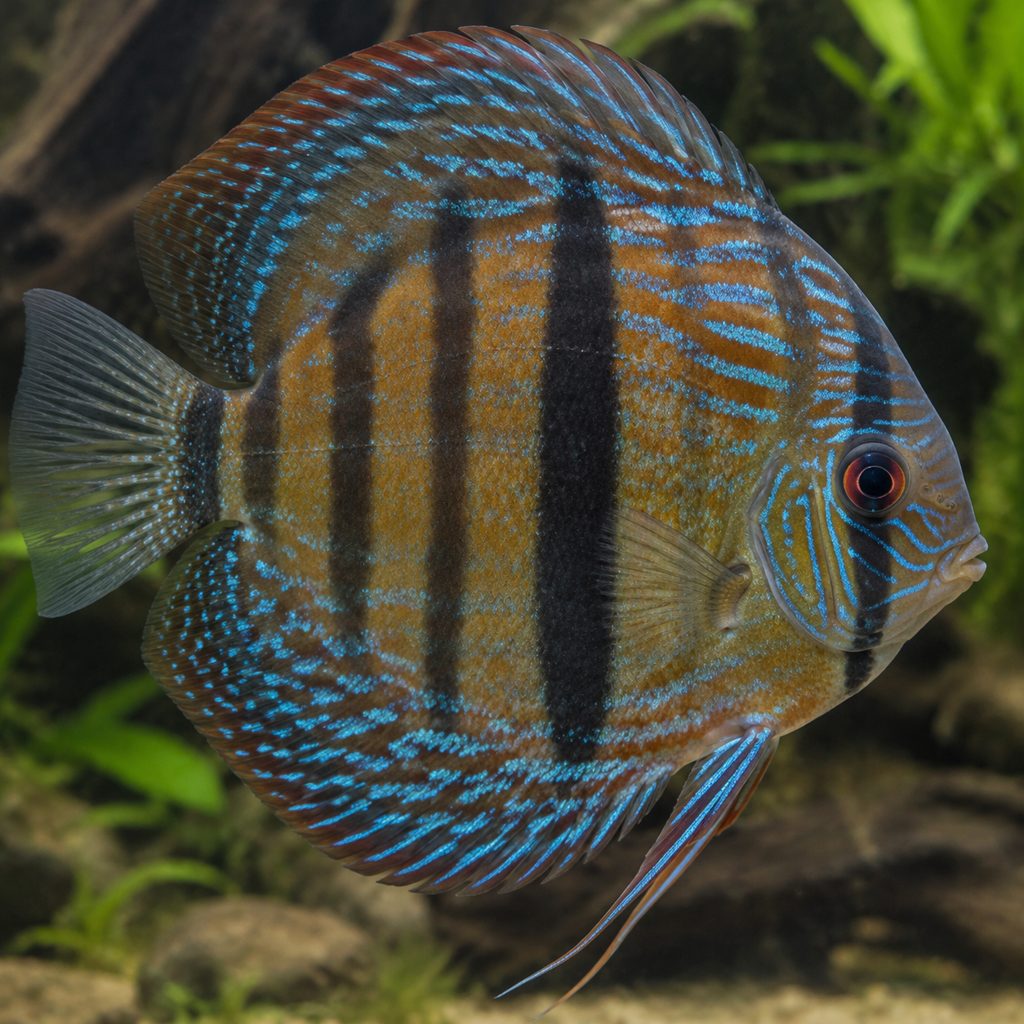
Heckel discus (Symphysodon discus) are recognizable by two especially broad vertical bars, but their appeal comes with a demanding care background. These wild fish are associated with Amazon blackwater: acidic water and warm temperatures. A keeper needs to think beyond matching a number on a test kit; quarantine, steady stabilization, and patient acclimation are part of the commitment.
The field marks and native conditions
The first and fifth vertical bars are wider than the others, making them a useful identification clue. Heckels occur in the Amazon basin, including areas near the mouth of the Rio Negro and the lower Abacaxis and Trombetas rivers. Their blackwater habitat has a pH of 4.5–5.5 and a temperature of 82–84°F (28–29°C).
| Feature | Heckel discus |
|---|---|
| Scientific name | Symphysodon discus |
| Range | Amazon basin, including near the Rio Negro mouth and lower Abacaxis and Trombetas rivers |
| Identifying pattern | Broad first and fifth vertical bars |
| Native water | Blackwater, pH 4.5–5.5 |
| Native temperature | 82–84°F (28–29°C) |
| Care difficulty | High |
These figures describe the native setting, not a complete aquarium recipe. Heckels can be sensitive to water conditions, and they may need considerable time to settle into a new aquarium. Rushing a fish from transport into a display tank simply because the temperature looks right does not account for the adjustment it needs.
Why keeping them takes experience
Wild fish may need quarantine, parasite treatment, and stabilization before they are ready to settle in. Move through those stages deliberately and observe the fish rather than trying to force a quick transition. Maintaining strongly acidic, soft blackwater also demands careful water management. See our article on RO water and blackwater management for related discussion, and our article on wild discus and cultivated strains for broader comparisons of appearance and adaptability.
A U.S.-oriented Aquarium Co-Op care guide discusses both wild-caught and captive-bred discus and says both can do well within the guide’s general pH range; it also notes that German-bred fish may tolerate harder, more alkaline water. This is useful general context, but the guide does not specifically address Heckel. Do not take its general range as proof that every Heckel will adapt to it, or that a particular Heckel has been captive-bred.
Buying one in the United States
The general U.S. channels named in that care guide include local breeders, fish stores, and online sellers. The information available does not confirm that any one channel currently stocks Heckels, or that a current listing is wild-caught. Ask a seller for the fish’s source and recent water conditions before buying. No verified U.S. price or current availability was found, so a typical cost cannot be stated responsibly.
If you are arranging an international shipment yourself, U.S. Fish and Wildlife Service guidance says live wildlife shipments generally require Form 3-177, use of an authorized designated port unless an exception permit applies, and 48 hours’ advance notice to the port inspection office for live or perishable shipments. These are general shipment procedures, not a Heckel-specific import ruling. Heckel-specific CITES, federal, state, and local status was not confirmed in the information reviewed; do not assume either a ban or unrestricted importation. Check applicable requirements with the authorities before proceeding.
A striking wild fish, not a casual purchase
Their calm, bold pattern offers something different from the bright colors of many cultivated strains. But the native blackwater background and long acclimation are part of the animal’s needs, not just a talking point. A Heckel is best considered by an aquarist ready to manage its water carefully, quarantine appropriately, and give it time to stabilize.
Frequently asked questions
Are Heckel discus a good first discus?
They are considered challenging because of their sensitive water requirements and slow acclimation. Gaining experience with discus care first is a more realistic route.
Can I use a general discus care guide for Heckels?
Use it as broad context, not a Heckel-specific prescription. The U.S. guide reviewed discusses discus generally and does not establish that its water guidance applies to every Heckel. Ask about the individual fish’s conditions and plan a careful transition.
Are Heckel discus currently available in U.S. stores?
No current Heckel listing or confirmed U.S. stock was verified. Local breeders, fish stores, and online sellers are general discus sources, but contact them directly about Heckels, origin, and availability.
‹ Back to all articles