 The Discus | Discus Fish Care and Breeding Guide
German Turquoise Discus: The History Behind the Strain
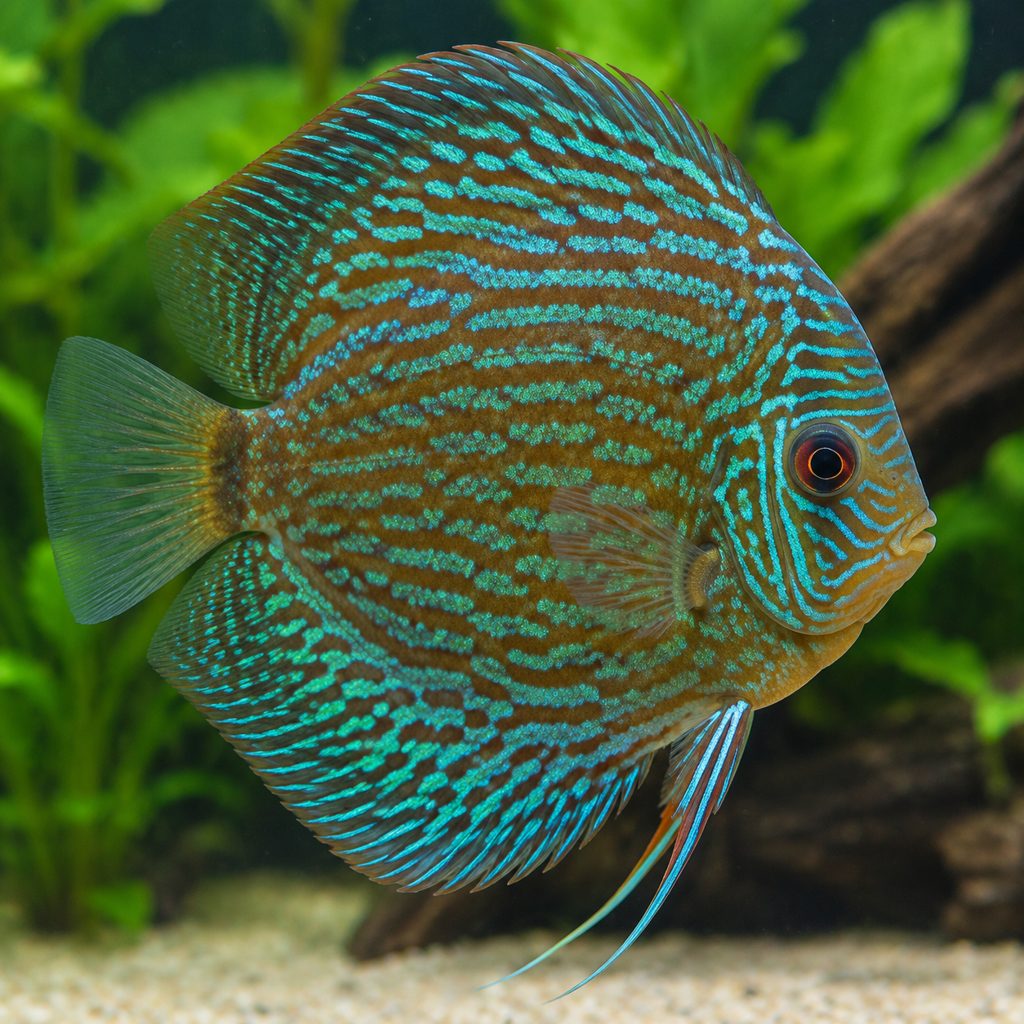
Turquoise discus are more than a blue-green color form on a seller’s label. Their breeding history reaches back to Germany in the 1960s and ’70s, when Schmidt-Focke and other breeders selected wild discus with strong blue-green coloration. Repeated breeding and selection across generations helped establish a more consistent Turquoise line. Later, breeding techniques moved to Southeast Asia, where places such as Penang became prominent production centers.
For U.S. hobbyists, that history is useful context—but it does not prove that a fish currently offered as “German Turquoise” has a documented lineage. Treat the name as a starting point for questions about the individual fish, not as a guarantee of provenance.
How the Turquoise line took shape
The early breeders were working with naturally variable wild fish, not a finished strain. They chose individuals with the blue-green appearance they wanted, bred them, then selected among their descendants. Repeating that process over generations made the desired coloration more consistent. Turquoise takes its name from the stone-like blue-green hue that became associated with the line.
That shift matters to discus history. Wild fish supplied the original variation; selective breeding made a particular color a defining feature. The result was not simply a different place of origin, but a line shaped by human choices over time. Blue cultivated strains that followed connect to that work, though names and exact family trees may differ among breeders.
From Germany to Southeast Asian farms
German breeding techniques later reached Southeast Asia. Penang, Malaysia, became one of the places known for discus production as the center of production gradually shifted toward the region. German-developed selection practices met local production systems, creating conditions for further strain development. The story is a continuation: the location of production changed, while the earlier Turquoise work remained part of the lineage behind modern blue forms.
| Period | What happened |
|---|---|
| Before selective breeding | Wild discus included blue-green individuals used as breeding stock |
| 1960s–’70s | Schmidt-Focke and other German breeders established the Turquoise line through selection and breeding |
| Later years | Breeding techniques spread to Southeast Asia, including Penang, as the region became a production center |
| Today | The lineage extends into many cultivated discus strains, including blue forms |
Our article on Penang’s discus farms and strain development looks at the production setting. For the relationship between Turquoise and related blue strains, see our article on Cobalt and Turquoise discus.
What a U.S. buyer can and cannot infer
A U.S.-oriented Aquarium Co-Op care guide names local breeders, fish stores, and online sellers as general places to find discus. It does not confirm that any of those channels currently has German Turquoise specifically. Ask a seller for the fish’s breeder, source, and any lineage information they can document; do not assume that every blue-green fish marketed under the name has a verified German line. No current U.S. listing, confirmed availability, or reliable strain-specific price was established in the market information reviewed here, so there is no sound basis for quoting a typical price.
The same U.S. care guide gives 85–86°F as display-care temperature context and notes that German-bred discus may tolerate harder, more alkaline water. Those are general care observations, not a guarantee for every German Turquoise fish. A strain name alone cannot tell you how a particular fish was raised or which water it is accustomed to. Ask the breeder or seller about its current conditions and acclimate it carefully.
If you are considering importing live fish yourself, general U.S. Fish and Wildlife Service guidance says live wildlife shipments generally require a wildlife declaration (Form 3-177), entry through a designated port unless an exception permit applies, and advance notice for live or perishable shipments. That guidance is not a German Turquoise-specific ruling. The species- or variety-specific CITES and U.S. status was not confirmed in the market research, so do not infer either a restriction or an exemption from the general import procedure. Check current requirements with the relevant authorities before arranging an import.
Why the history still matters
Knowing the Turquoise story helps separate appearance from provenance. The blue-green color points to a breeding tradition that began with wild fish in Germany and continued through producers in Southeast Asia. It does not, by itself, identify a particular breeder or establish a fish’s exact ancestry. When you choose a discus, pair the strain name with practical information: source, feeding history, size, and the water conditions the fish has been kept in.
Frequently asked questions
Are German-bred Turquoise and Southeast Asian strains unrelated?
No. The history is connected: German breeders established the Turquoise line and techniques later spread to Southeast Asia, where breeding continued and diversified.
What fish were used to develop Turquoise?
Wild discus with strong blue-green coloration. Breeders selected and crossed fish over successive generations to make the color more consistent.
Can I find German Turquoise at a U.S. fish store?
Local breeders, stores, and online sellers are general discus sources, but current German Turquoise stock was not confirmed in the U.S. information reviewed. Contact sellers directly and ask them to explain the strain name and fish’s source; availability and lineage claims should be verified individually.
‹ Back to all articles