 The Discus | Discus Fish Care and Breeding Guide
High-Body Discus: How to Judge Shape and Choose a Fish
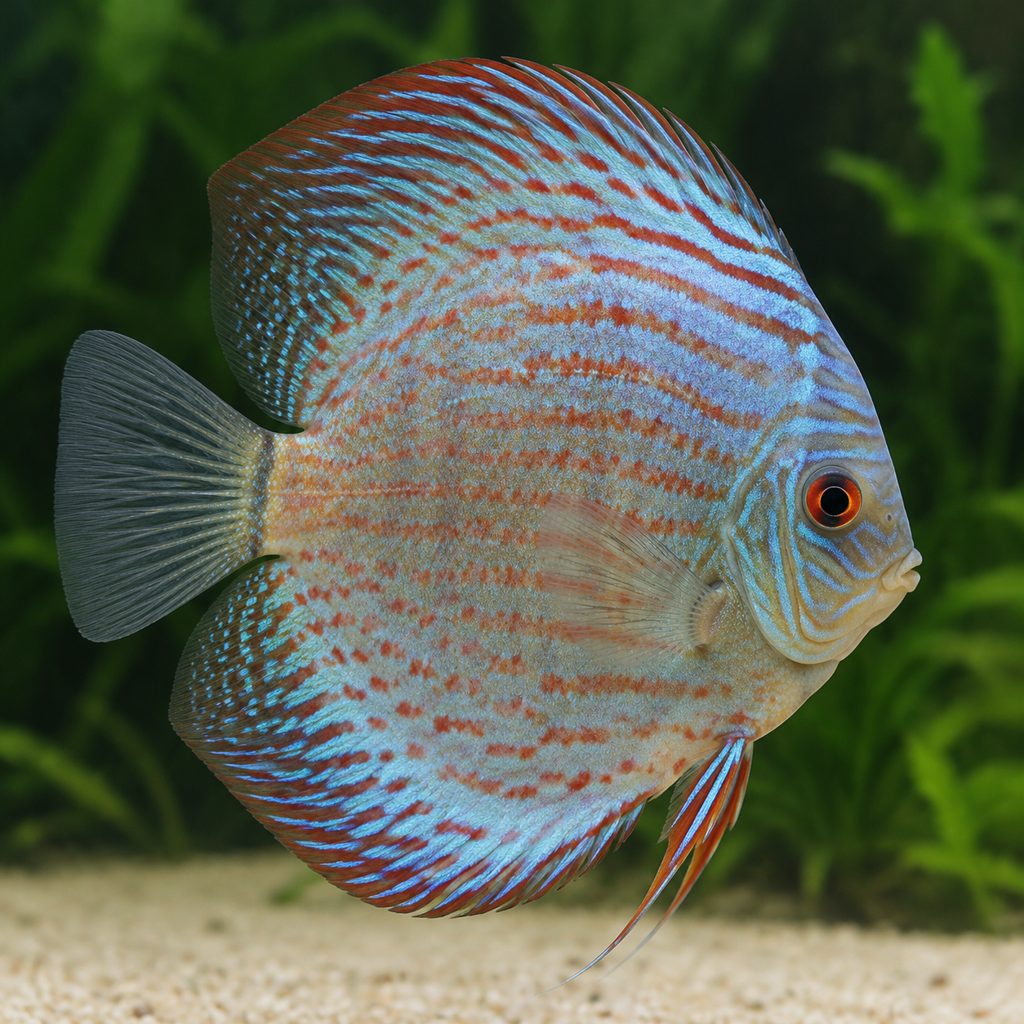
Color and pattern may catch your eye first, but body shape is a major part of how many keepers assess a discus. A high-body fish has a deeper profile relative to its length, giving it a rounder silhouette. The aim is not simply to find the tallest-looking fish. Symmetry, fin shape, and the proportions of the whole animal matter more than one dramatic feature.
What “high-body” describes
“High-bodied” is used as a sales descriptor in the U.S. market: a specialist catalog, for example, lists a “High Bodied Blue Tiger Turquoise Discus.” The term describes a fish or line with a relatively large body-height-to-body-length ratio. There is no shared numerical standard confirmed for the label, so do not treat it as a formal grade with a universal cutoff.
For a consistent comparison, view the fish from the side. Measure body length from the tip of the snout to the base of the tail fin, and body height at the deepest part from back to belly, excluding the dorsal and anal fins. You can record body height divided by body length and multiply by 100. The ratio is useful only when fish are measured the same way; it is a comparison aid, not a universal pass/fail threshold.
Look for a complete, balanced outline
The appeal is a rounded profile that approaches a circle. On a balanced fish, the dorsal and anal fins extend smoothly and complete the outline rather than appearing out of proportion. Check symmetry from the side, including the relationship between the eyes and body. Then look from above and at an angle. A side photograph can hide a bend or other distortion that becomes clearer from another view.
Height alone can mislead. A strongly raised back line or fins that do not match the body can make the fish look uneven. Compare both sides, and consider whether the mouth, eyes, and fins appear balanced. If you are choosing among several fish, take time to observe them swimming rather than selecting from a single still image.
| What to assess | What to check |
|---|---|
| Body proportions | Depth relative to length and a near-symmetrical outline |
| Dorsal and anal fins | Whether they spread to complete the rounded profile |
| Overall balance | Eye and mouth placement and evenness of the paired fins |
| Swimming | Natural movement without wobbling or tilting |
| Breathing | No unusually rapid breathing or obvious difference between gill movements |
| Feeding | Normal interest in and response to food |
A fish with an attractive outline should also appear to function normally. Observe breathing, swimming, and feeding behavior before purchase. A high-body label cannot tell you the fish’s current condition, and a premium appearance is not a substitute for checking health.
Breeding lines and U.S. buying examples
High-body traits have been refined through selective breeding in lines such as German and Penang discus. Breeders pair fish with deeper profiles and select offspring to make the trait more consistent. High-body shape can be combined with different patterns as well; see our article on snakeskin and leopard discus for pattern types.
One U.S. specialist listing used “High Bodied Blue Tiger Turquoise Discus” and showed a price range of $40–$182 when retrieved on October 12, 2026. Stock status was not shown in the retrieved listing, and the range is one seller’s example—not a market average or guarantee of the price you will pay. Direct online specialist catalogs such as Discus.com are a verifiable buying channel, and the seller describes domestic U.S. shipping. Ask about current availability, fish size, shipping arrangements, and arrival policies before ordering. If you can view fish in person, compare proportions and behavior directly.
Care does not change with the silhouette
A high-body discus remains a discus. The shape does not require a special care method. Keep the usual warm range at 82–86°F (28–30°C), monitor pH around 6.0–7.0, and maintain the regular water-care routine. Stable conditions and good daily observation support the fish’s health; body shape is a selection trait, not a substitute for husbandry.
FAQ
Is there a numerical definition of high-body?
No shared U.S. measurement standard was confirmed. Compare body depth and length using the same method, then judge the silhouette and balance rather than relying on a cutoff.
Why might a high-body discus cost more?
Selective breeding and selection for consistent shape take work, and some buyers seek the trait. A single U.S. listing showed $40–$182, but that is one seller’s range, not a typical market price.
Are high-body discus harder to keep?
The body type does not call for a different care routine. Maintain the same temperature and water conditions used for other discus.
What should I check before buying one online?
Confirm current stock, the fish’s size, shipping terms, and the seller’s arrival policy. If possible, request current images or video and assess swimming and breathing as well as shape.