 The Discus | Discus Fish Care and Breeding Guide
Discus Substrate and Driftwood: Bare Bottom or Decorated?
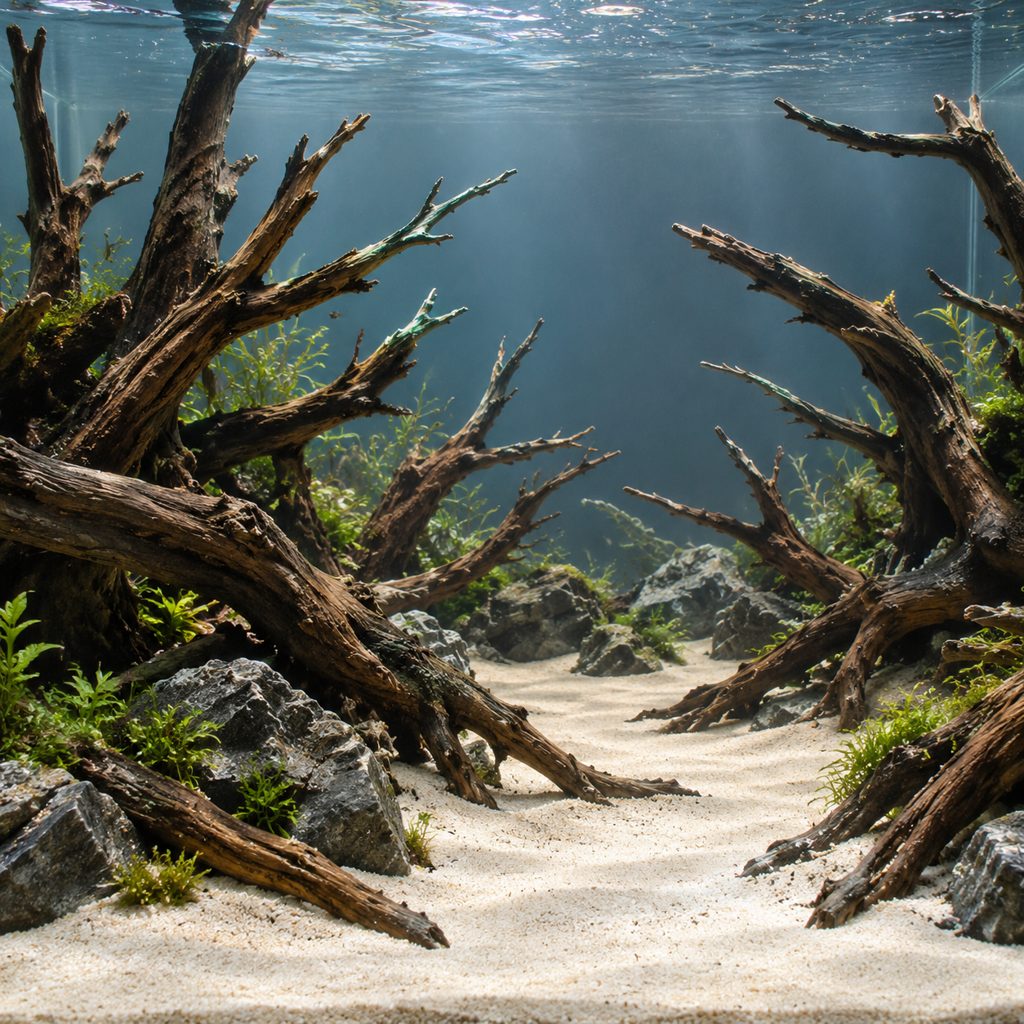
Choosing what goes on the bottom of a discus aquarium is a balance between maintenance and appearance. A bare floor makes waste easy to see; substrate can make a display feel more natural but gives debris places to collect. Driftwood adds structure and can tint the water. The care reference ranges here are pH 6.0–7.0 and GH 1–10°dH. Test your aquarium rather than assuming a material will produce a particular reading.
Bare bottom: easy to inspect
A bare-bottom tank has no substrate. It is a straightforward option when cleaning and water-quality management come first: waste and uneaten food are visible and can be siphoned out promptly. You can also assess how much is accumulating without disturbing a bed of gravel. The tradeoff is visual; an undecorated floor can look plain, though a background or a carefully placed piece of wood can add interest without covering the bottom.
Gravel and planted substrates need attention
Substrate catches organic matter between its grains. The surface may look clean even while debris remains below, so regular cleaning matters. A thin layer of aquarium gravel is easier to maintain than a deep bed, but it still needs attention. The Japanese example of Oiso gravel is not a U.S. standard or a recommendation to seek an equivalent by name; choose a material sold for aquarium use and monitor what it does in your water.
| Consideration | Bare bottom | Thin gravel layer |
|---|---|---|
| Cleaning | Waste is visible and easy to siphon | Debris can collect between grains |
| Water-quality upkeep | Easier to inspect | Requires routine cleaning and monitoring |
| Appearance | Simple and uncluttered | More natural-looking display |
| Best suited to | Maintenance-first setups | Keepers who accept the added cleaning |
For a planted tank, U.S. products offer another option. Seachem markets Flourite as a stable clay-gravel substrate for planted aquariums and says it is not chemically coated or treated and does not change pH. That is the manufacturer’s claim for its product, not a guarantee that every substrate or aquarium will behave the same way. On October 12, 2026, an Amazon listing for a 7 kg (15.4 lb) bag of Flourite Black showed $35.79. Marketplace listings also use names such as Flourite Black Sand and Flourite Red. Check the product label, amount needed, and your own water readings before choosing.
Driftwood, tannins, and pH
Tannins from driftwood can turn water amber and may lower pH, but the amount of change depends on the type and quantity of wood and on the water’s buffering capacity, including KH. Some aquariums show little pH movement. Amber color alone does not tell you whether pH has changed or whether the water remains within your target range; test it.
“Malaysian driftwood” appears in U.S. aquarium product listings. One listing showed an aquascaping decoration at $12.71; another named Ultum Nature Systems Malaysian driftwood, small, at 8–12 inches and $28.99. Those October 2026 examples show that this product term and size range are sold online, not that prices or availability are consistent everywhere. Before adding wood, check that it is intended for aquarium use and consider the size and shape in relation to your tank.
Boiling driftwood before placement can help release air and dirt from within the wood and make it more likely to sink. Keep monitoring water after adding it. Do not chase amber water as a goal or assume every piece will have the same effect on pH.
Use aquasoil with a testing routine
Aquasoil is commonly used for planted aquariums, and some products can lower pH. The effect and how long it lasts depend on the product and the water’s buffering capacity; it is not guaranteed to happen in every setup. Driftwood and aquasoil together may influence pH, so measure rather than relying on appearance. Continue tracking pH and GH after any substrate or wood is added, and make adjustments based on the fish and measured conditions.
The U.S. product examples above do not establish a local preference for bare-bottom tanks, a particular gravel, or driftwood. There is no need to copy a popular-looking setup if it makes routine cleaning difficult. For how light, shadow, and furnishings work together, see our article on discus lighting and layout.
FAQ
Will a bare-bottom tank look too empty?
It is simple, but the fish and waste are easy to see. A background or limited driftwood can add visual interest without making the floor difficult to clean.
Is amber water from driftwood harmful?
The color comes from tannins, and pH may fall, though the degree varies. Test pH and water conditions instead of judging by color alone.
What pH and GH should I monitor?
The reference ranges are pH 6.0–7.0 and GH 1–10°dH. Keep measuring after adding substrate, driftwood, or aquasoil.
How deep should gravel be?
Use a thin layer if you choose gravel. A deeper bed gives debris more places to settle and makes maintenance harder.