 The Discus | Discus Fish Care and Breeding Guide
Discus Summer Heat and Power Outage Emergency Guide
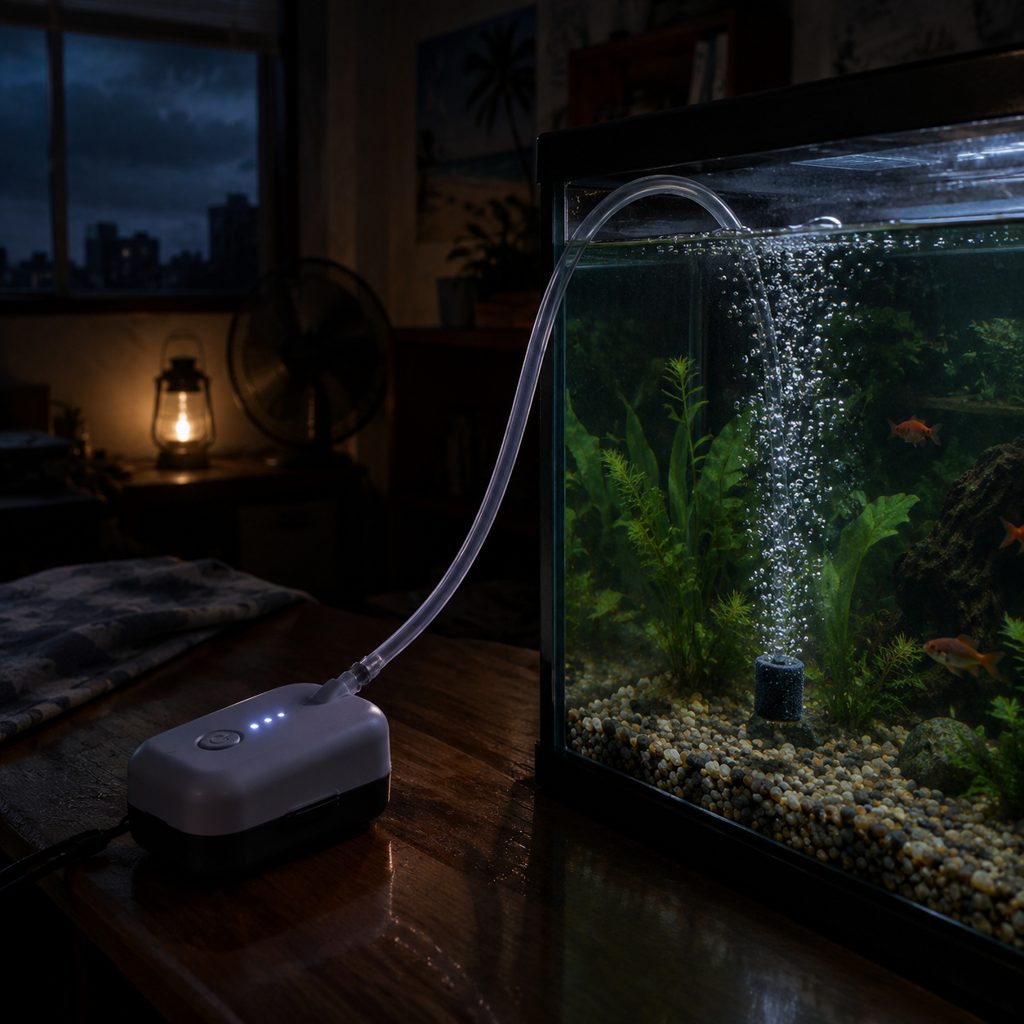
A hot room can turn a comfortable discus aquarium into an urgent problem before the afternoon is over. Check the tank’s daily high—not just its temperature when you happen to walk by—and have an outage plan ready before storm season. The care range discussed here is 82–86°F (28–30°C). Treat this as husbandry guidance, not as a claim about one U.S. standard; the right response depends on the fish and the conditions in your aquarium.
Read the temperature early
Start planning a response when the water climbs above 86°F (30°C). Around or above 91°F (33°C), regard the heat as a serious warning. Warm water holds less dissolved oxygen, while a fish’s oxygen demand rises as its metabolism speeds up. The fish needs more oxygen just as less is available, which raises the risk of oxygen stress.
Use an aquarium thermometer and record the afternoon peak during hot weather. Watch for unusual rapid breathing or fish gathering near water movement. These observations do not diagnose a specific problem, but they are reasons to check temperature and aeration promptly. Do not wait until a fish looks distressed before planning how to cool the tank.
Fans and chillers solve different problems
| Method | Cooling capacity | Advantages | Watch-outs |
|---|---|---|---|
| Evaporative aquarium fan | About 4–7°F (2–4°C) as a rough guide | Relatively simple to add | Cooling depends on room conditions; evaporation means more top-offs |
| Aquarium chiller | Can maintain a set temperature more steadily | Smaller temperature swings | Requires installation space and adds to electricity use |
A fan cools by promoting evaporation. Its actual performance changes with room temperature, humidity, and airflow, so the approximate 4–7°F drop is not a guarantee. Replace evaporated water as needed. Since water evaporates while minerals and salts remain, keep an eye on concentration and water quality. If a fan cannot hold a suitable temperature in your conditions, consider a chiller and choose equipment appropriate to the aquarium.
U.S. online listings use terms such as “aquarium chiller fan” and “aquarium cooling fan.” On October 12, 2026, an Amazon listing showed a DaToo mini fan at $7.99 and a hygger adjustable fan at $17.09. Those are listing examples, not a guarantee of current stock or cooling performance. A U.S. Aquarium Co-Op listing for its Air Pump with Battery Backup described automatic battery takeover, with about 20 hours of continuous operation or 40 hours in power-save mode. The listing showed $29.99 for a single-outlet model and $34.99 for a dual-outlet model on that date. Check current specifications and test any backup equipment before relying on it.
If the power goes out
Filters and powered aeration stop when electricity fails. Start a battery-powered air pump and keep the water surface moving; oxygen is the immediate priority. Then slow temperature swings. Covering the aquarium with foam insulation can reduce the effect of outside air. In summer, keep surrounding heat from reaching the water; in winter, slow heat loss. Insulation does not actively heat or cool, so continue checking the thermometer.
If the outage may last, conserve the air pump’s battery and feed lightly or pause feeding. Consider a suitable backup power source or moving the aquarium or fish to a powered location early enough to avoid a rushed transfer. During a move, avoid abrupt changes in temperature and water quality; see our article on transporting and moving discus.
After power returns
Confirm that the filter has restarted and water is circulating. After a lengthy shutdown, inspect the filter and media and check the water rather than assuming everything is immediately back to normal. Test ammonia and nitrite. If readings are abnormal, reduce or pause feeding, use appropriate water changes to restore quality, and observe the fish as the system stabilizes.
A little preparation makes the first minutes of an outage more manageable:
| Check | What to do | When |
|---|---|---|
| Battery air pump | Check charge or batteries and test operation | Before outage season |
| Temperature record | Note the daytime high | Daily during summer |
| Insulation | Keep foam or similar material where it is easy to reach | Before an outage |
| Cooling gear | Remove dust from fans and inspect equipment | Regularly during the season |
FAQ
Can an aquarium fan get my discus through every summer?
Not necessarily. The approximate 4–7°F (2–4°C) cooling figure varies with humidity, room temperature, and airflow. If the aquarium keeps approaching 91°F (33°C), reassess the setup and consider a chiller rather than relying on a fan alone.
What matters most when the power goes out?
Restore surface movement and oxygen with a battery air pump first, then reduce temperature swings. Keep checking the fish and water temperature.
What should I prioritize in a winter outage?
Use insulation to slow heat loss and monitor the water. Insulation is not a heater, so arrange a safe heat source or a powered location if the outage is prolonged.