 The Discus | Discus Fish Care and Breeding Guide
How to Hatch Brine Shrimp for Discus Fry
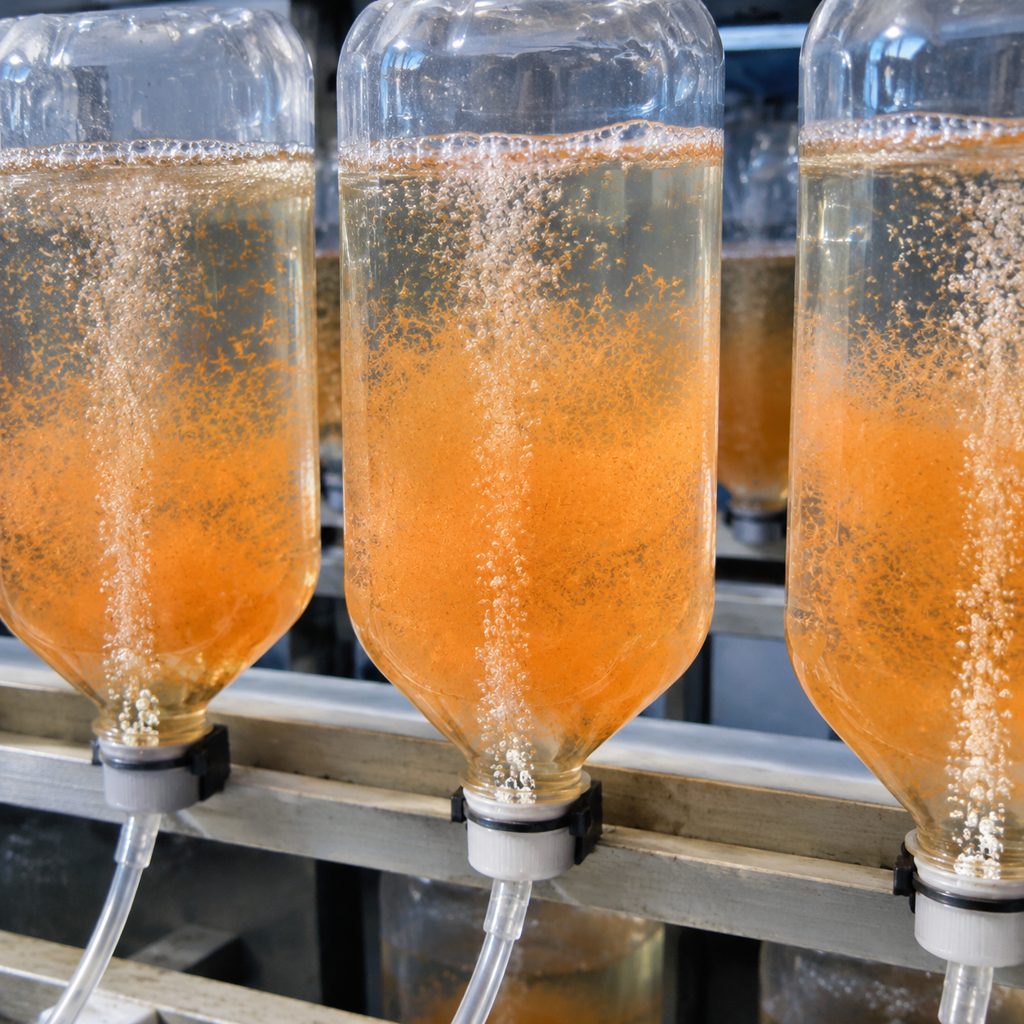
Freshly hatched brine shrimp are a useful live food for discus fry. The nauplii move through the water, which can prompt a feeding response, and their small size suits young fish. A basic hatch setup needs salt water, stable warmth, and continuous aeration. The careful part comes at harvest: collect the swimming larvae while keeping eggshells out of the fry tank.
The hatch conditions
| Item | Target |
|---|---|
| Water temperature | 77–86°F (25–30°C) |
| Salinity | 15–35 ppt, measured with a salinity meter |
| Time to hatch | 24–36 hours |
These are the technical care-guide targets, not a claim that one setup is a universal US hobby standard. Use a salinity meter to measure ppt. Do not treat the range as a fixed specific-gravity conversion: the relationship depends on water temperature and the instrument, so a specific gravity number cannot be matched to the entire salinity range uniformly.
Buy eggs or a ready-made hatchery
US specialist mail-order options include Brine Shrimp Direct, which identifies its business in Ogden, Utah. Its catalog lists “Premium Grade Brine Shrimp Eggs” in an 8 oz package, observed at $28.95 in October 2026. The supplier also uses terms such as decapsulated and shell-free “E-Z Egg,” which can reduce the work of separating shells. These are individual retailer examples and dated prices, not a broad price survey.
A converted plastic bottle can work as a small hatchery, or you can use dedicated equipment. The same supplier listed a hatchery dish for $29.95 and a starter kit with a dish, eggs, and spirulina powder for $31.25 in the October 2026 snapshot. Frozen brine shrimp are another option if you do not want to hatch food: its catalog listed a box of seven 3.5 oz trays for $15.05. Availability and prices can change, so check the retailer’s current listing before ordering.
Set up the hatching container
Use a small container or a purpose-built hatchery that can hold salt water. Add strong, continuous aeration so eggs stay in motion instead of settling and clumping at the bottom. Hold water between 77 and 86°F (25–30°C) through incubation. In cool weather, choose a location where the temperature remains steady; avoid placing the vessel somewhere it can swing with drafts or direct heat.
Mix salt water to 15–35 ppt and check it with a salinity meter. Keep the bubbles vigorous enough to keep the eggs circulating. Set a timer or note the start time so you know when to check for hatching; the expected window is 24–36 hours, depending on conditions and egg quality.
Harvest the nauplii without the shells
When hatching begins, switch off the aeration and let the container settle. Shine a light at one side. The larvae are attracted to light and gather there, while empty shells float at the surface. Draw the swimming nauplii from the illuminated area with a pipette or airline tubing, taking care not to collect the floating shells.
Catch the larvae in a fine brine shrimp net and rinse them with dechlorinated fresh water before feeding. Do not pour hatch water directly into the fry aquarium; that water is salty and may contain shells or unhatched eggs. If you use decapsulated eggs, follow the product directions, since removing the shell changes the separation step.
Feed promptly and keep the routine clean
Newly hatched nauplii carry yolk nutrients, and freshly hatched food is considered most nutritious soon after hatching. Some aquarists soak harvested shrimp in a liquid enrichment product before feeding. Use the nauplii while fresh rather than holding them for a long time. The care schedule suggests feeding fry 3–5 times per day in small portions; see our article on the discus feeding schedule for the broader routine.
FAQ
What specific gravity is 15–35 ppt?
There is no single specific-gravity range that maps uniformly to 15–35 ppt across different temperatures and instruments. Measure salinity directly with a meter, or use your hydrometer’s temperature-correction directions.
Why have my brine shrimp eggs not hatched?
Check that the water remained at 77–86°F (25–30°C), salinity is within 15–35 ppt, and the eggs are still fresh. Under suitable conditions, the expected hatch is 24–36 hours; eggs and equipment can affect the result.
Can I feed the eggshells along with the shrimp?
Separate them. Let the container settle and use light to gather swimming nauplii away from floating shells, or choose decapsulated eggs to reduce the separation work.
‹ Back to all articles