 The Discus | Discus Fish Care and Breeding Guide
A Discus Feeding Schedule for Fry, Juveniles, and Adults
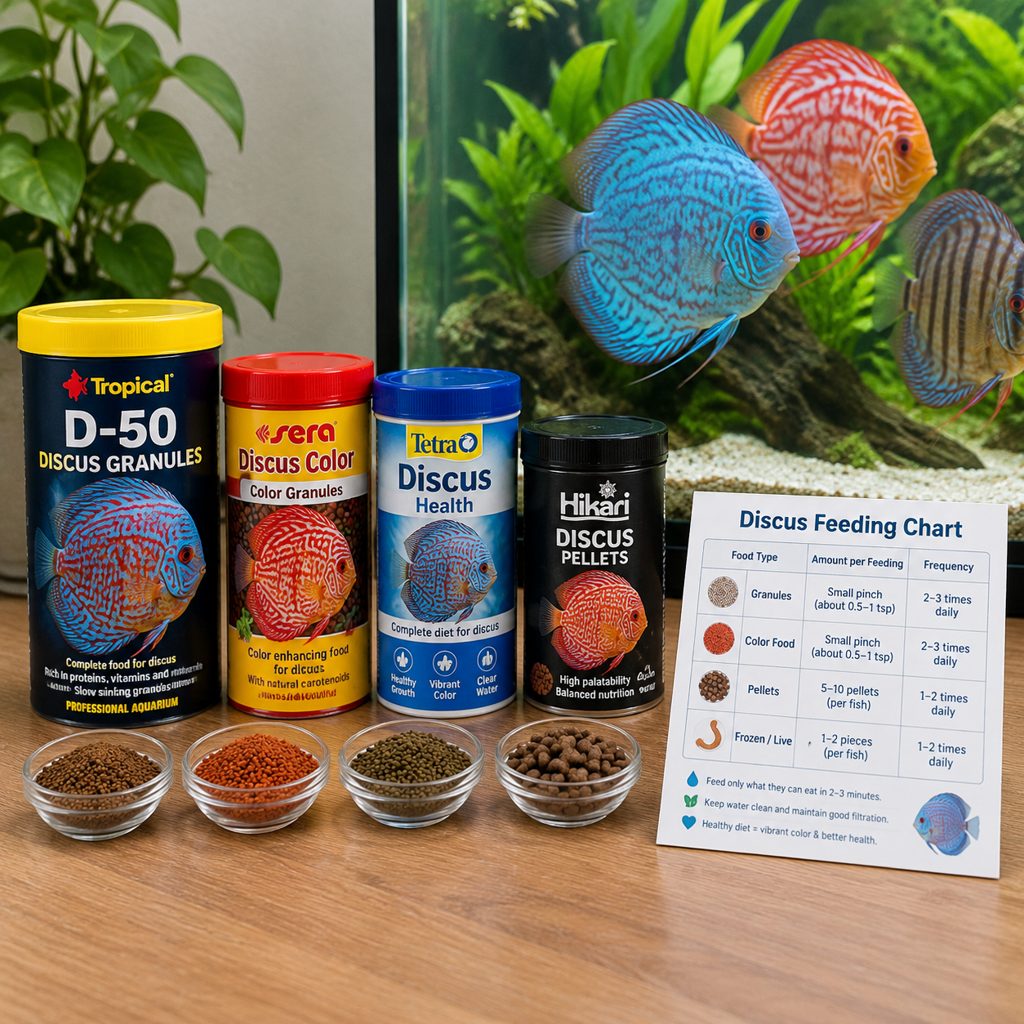
“How often should I feed?” has a different answer for a growing discus than for an adult. Young fish need frequent meals to support growth; adults generally need fewer. Portion size matters just as much as the schedule. Food left on the bottom becomes waste, so offer small amounts and watch how quickly the fish finish.
Feed by growth stage
The schedule below is a practical care guideline, not a verified US-wide keeper consensus. Use it as a starting point, then account for the fish’s condition, tank load, and water quality.
| Stage | Feedings per day | Food examples |
|---|---|---|
| Fry | 3–5 | Brine shrimp and finely crushed prepared food |
| Juveniles | 2–3 | Prepared food, frozen bloodworms, and beef heart |
| Adults | 1–2 | Prepared food and frozen bloodworms, among other options |
Fry are fed more often to support growth. Adults need fewer meals for maintenance, and keeping an adult on a fry-style schedule can leave extra food and waste in the aquarium. Our article on discus growth and lifespan discusses how feeding and water changes change as fish mature.
Prepared foods are available in several US listings
You do not have to make homemade food or use live food as the only options. US marketplace listings include branded discus foods sold as granules and other prepared formats. An October 2026 snapshot showed Hikari Discus Bio-Gold, 2.82 oz for $14.99; Sera Discus Prob Granules, 4 oz for $19.99; and New Life Spectrum Discus, 150 g for $14.68. These are dated individual listings, not typical prices or guaranteed current offers. Package sizes and formulations differ, so compare the label and choose a food your fish will eat.
For prepared food, the care reference recommends looking for 40–50% protein. Frozen bloodworms, brine shrimp, and beef heart can add variety. For fry, choose a size they can take; finely crushed prepared food and newly hatched brine shrimp are options. Our article on hatching brine shrimp covers making a live-food batch at home.
Keep portions small
Offer only what the fish can finish in a few minutes. Start with a small pinch or portion, watch the feeding response, and add a little more only if the fish are still eating actively. Some prepared foods absorb water and swell, so be conservative when introducing a new product.
If food remains after a few minutes, siphon or pipette it out and reduce the next serving. Uneaten food and waste can add ammonia and put extra demand on the biological filter. Our article on cycling a discus tank explains how the filter processes waste, but even a mature filter is not a reason to leave leftovers in the aquarium.
Is a weekly fasting day necessary?
A day without food about once a week is an option sometimes used for healthy adult discus; it is not a required rule. Do not impose a fasting day on fry or juveniles that are growing, or on thin or recovering fish. Continue normal water testing and maintenance on a no-feed day. The schedule and whether to include a fasting day should follow the individual fish’s condition, not a claim that all US keepers follow one routine.
Build a routine around the fish
Feed at consistent times, track how much disappears, and observe body condition and appetite. As growth slows, move toward the adult range of 1–2 meals daily rather than continuing juvenile quantities. Match water changes to the fish load and the waste produced. A good feeding plan leaves the fish in suitable condition without making the tank harder to maintain.
FAQ
How should I space 3–5 meals for fry?
Spread them across the hours the fish are awake. Give a small amount each time, and remove anything that settles uneaten.
Which discus food should I buy in the US?
Check the food’s format, ingredients, package size, and protein analysis rather than relying on the brand name alone. Prepared foods in US listings include Hikari Discus Bio-Gold, Sera Discus Prob Granules, and New Life Spectrum Discus. The observed prices above are October 2026 snapshots and may change.
Can adult discus eat twice a day, or should they fast weekly?
The reference adult schedule is 1–2 meals a day, so twice daily is within that range. A weekly fasting day is optional for healthy adults, not a universal requirement. Do not skip meals for growing juveniles or fish that are thin or recovering.
‹ Back to all articles