 The Discus | Discus Fish Care and Breeding Guide
Peat and Blackwater for Discus: Safe, Gradual Aquarium Use
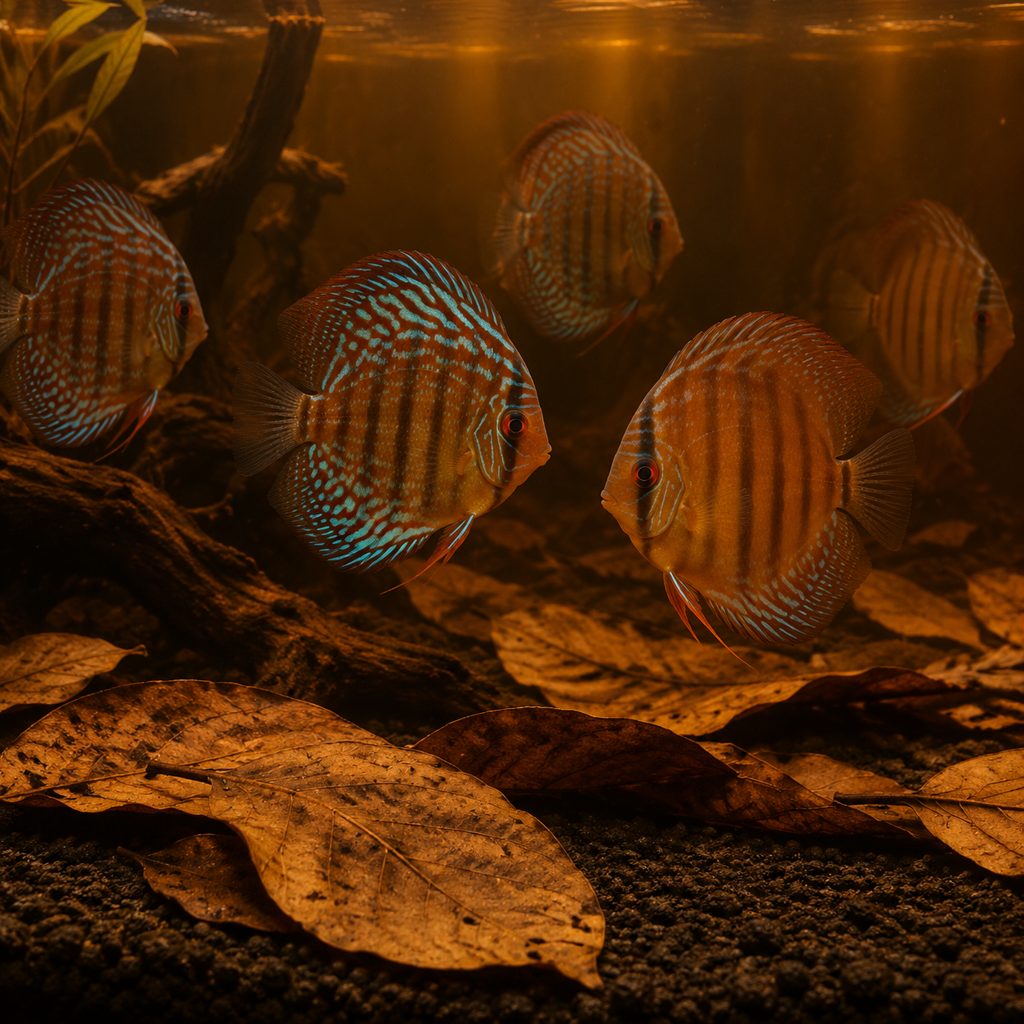
Amazonian blackwater gets its tea-colored appearance from compounds released as leaves and wood break down. Peat can create a similar amber tint and lower pH in an aquarium, but it is optional—not a requirement for keeping discus. In the US, aquarists can also find products marketed as blackwater conditioners and botanical leaves, so peat is not the only route to tannin color.
Blackwater, pH, and captive discus
Blackwater is colored by tannins from decomposing plant material. Amazonian blackwater is described at pH 4.5–5.5, while wild discus waters are described across pH 4.5–6.5. Captive discus can be kept at pH 6.0–7.0, so copying the most acidic wild conditions is not essential. Stability is more useful than chasing a number that looks “natural.”
Peat, or partially decomposed plant material, releases tannins and humic acids. This can shift water toward a more acidic pH and turn it amber, like weak tea. Use peat sold for aquarium or tropical-fish use rather than unprepared garden or landscaping material. Read the product directions and start below the suggested amount.
US products and botanical options
US retail listings use names such as “BlackWater” and describe some products with “humic & fulvic acid” terminology. A Brightwell Aquatics blackwater product listing observed in October 2026 was 250 mL for $10.48. That is a snapshot of one online listing, not a current guarantee or a universal price.
Catappa leaves, also called Indian almond leaves, are another commercially available way to add tannins. Aquarium Co-Op describes its leaves as tinting water amber-brown and notes uses including bettas, shrimp, and other fish, as well as leaf litter and biofilm. Its observed listing for 20 leaves was $12.99 in October 2026. Marketplace results also included products named AZOO PLUS Triple Black Water and Fritz Aquatics Dark Water Almond Leaf Extract. These examples show that “blackwater” and “almond leaf extract” are familiar retail terms; they do not establish that one approach is standard for discus keepers.
A reliable US listing and price for aquarium peat granules were not confirmed in the local product check. That does not mean peat is unavailable. Compare aquarium-specific products and instructions, and do not assume a botanical liquid, leaf, and peat will affect every aquarium in the same way.
Two ways to use peat
- In the filter: Put peat in a mesh bag and place it among the media in a canister or other filter. Water passes through the peat as it circulates.
- In the aquarium: Place a small amount in a mesh bag or pouch and submerge it. This makes it easier to start cautiously and remove the material if the result is stronger than you want.
Measure pH before adding anything and again afterward. Record the color and the reading. There is no single dose that produces the same outcome in every aquarium, so use the manufacturer’s dose as an upper reference rather than a starting target.
| Item | Practical approach |
|---|---|
| Amount | Begin below the manufacturer’s suggested amount; adjust while watching color and pH |
| Replacement | Replace peat when the amber tint fades and its effect weakens |
| Monitoring | Measure before and after use and keep a record |
Protect the aquarium from a sudden pH drop
The care reference describes GH 1–10°dH as soft water, but GH alone does not show how resistant pH is to change. Check KH—the carbonate hardness/alkalinity that buffers pH—as well as GH and pH before using peat. Low KH means less buffering, so adding peat can cause a sharper pH fall. Add a small amount, then observe readings over several days before making another adjustment. Be especially cautious if the tank is already acidic.
Amber water is not automatically dirty water; the color comes from tannins. If you prefer a clearer display, use less peat or choose a lighter botanical treatment. Do not remove or add a large amount abruptly just to change the appearance. Fish condition and stable chemistry matter more than matching a particular shade.
FAQ
How low will peat take my pH?
It depends on the water’s starting chemistry and how much peat you use. Captive discus can be kept at pH 6.0–7.0, while wild waters are described at pH 4.5–6.5. Measure pH and KH and adjust in small steps.
Is amber water harmful to discus?
Tannins cause the tint, as in natural blackwater. Monitor pH and KH while using any tannin source, and reduce or remove some material if the color is too dark or water chemistry changes too quickly.
Do US keepers have to use peat for blackwater?
No. Peat is optional. Retail listings include blackwater extracts and Catappa/Indian almond leaves, but those examples do not prove a single locally preferred method. Choose an aquarium product you can use gradually and monitor.
‹ Back to all articles