 The Discus | Discus Fish Care and Breeding Guide
Discus Lifespan and Growth: Size by Age and Care Needs
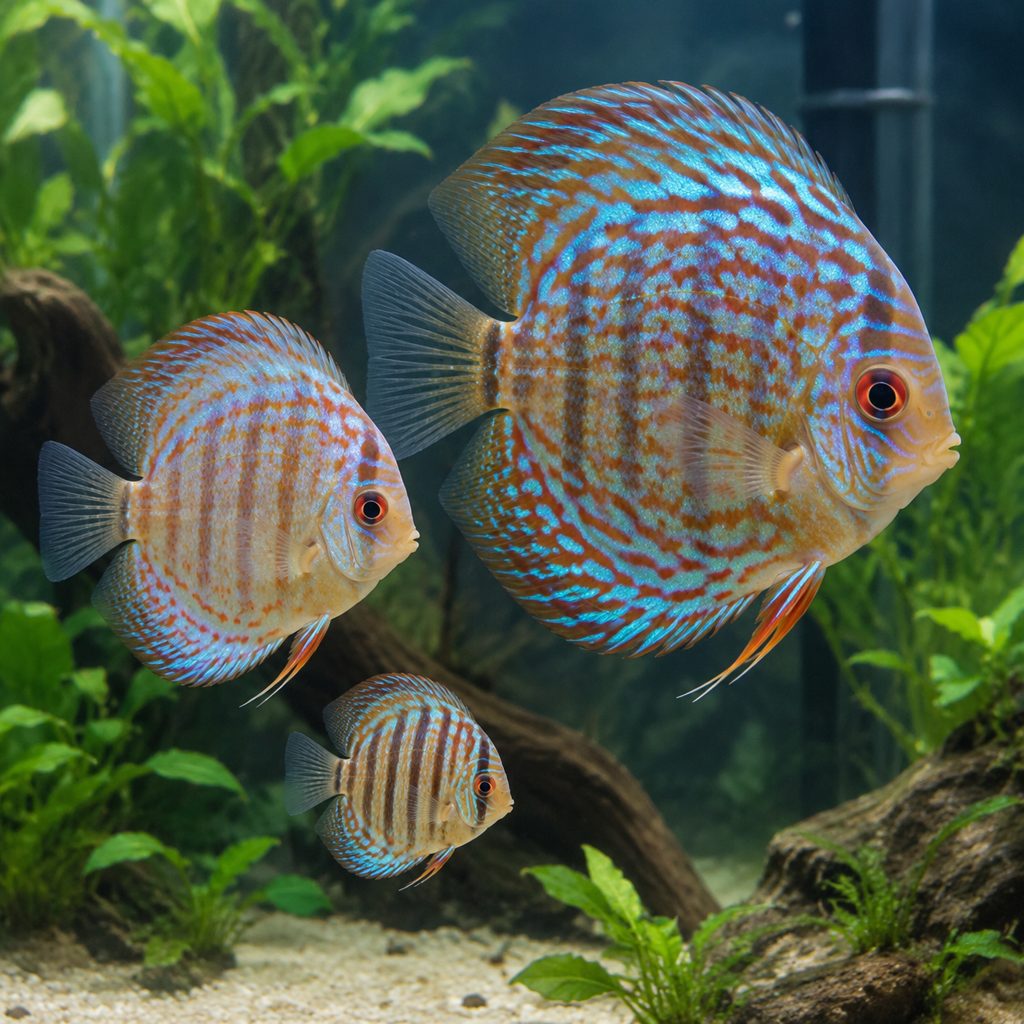
Discus can be a decade-long commitment, and their care routine changes as they grow. A reference estimate puts lifespan at 10–15 years with appropriate care, but the available US market information does not verify that as a locally measured average. Treat it as a planning guide, not a promise. Consider the time commitment before bringing home a fish, especially if a move or household change could affect your ability to maintain the aquarium.
Growth guideposts from fry to adult
The sizes below are approximate. Fish of the same age can differ, in part because feeding and water-change routines affect growth.
| Age | Approximate length |
|---|---|
| 3 months | About 2 in (5 cm) |
| 6 months | 3.1–3.9 in (8–10 cm) |
| 12 months | 4.7–5.9 in (12–15 cm) |
| Adult | 5.9–7.9 in (15–20 cm) |
Use the table to notice broad development, not to diagnose a fish from a ruler reading. Appetite, swimming, body condition, and water quality tell you more than a small difference from an age-based target. If a young discus is behind the guidepost, first review its routine and overall condition.
Feeding and water changes by life stage
Young fish grow quickly and are commonly cared for with more frequent meals and more frequent water changes. The reference schedule below is a practical starting point from the care guidance, not a verified US keeper consensus. Adjust for stocking density, filtration, food offered, and test results.
| Stage | Temperature | Water changes | Feedings |
|---|---|---|---|
| Fry and juveniles | About 86°F (30°C) | At least 30% daily or every other day | 3–5 times a day |
| Adults | 82–86°F (28–30°C) | 30–50% weekly as a starting point | 1–2 times a day |
As growth slows near adult size, the fish needs less energy for growth. Continuing the same quantity and frequency used for juveniles can leave extra food and waste in the aquarium. Remove leftovers and adjust the routine based on nitrate trends and general water condition. If ammonia or nitrite is detectable, change water and review the filter and feeding load. Our article on the discus feeding schedule covers portions and food choices.
What US strain names and listings tell you
Shopping listings can use market terms that help distinguish the fish being offered. One US online specialist separates cultivated fish under “hybrids” from its “wild discus” category. Its hybrid category advertised more than 100 strains, with examples such as German Red Turquoise, Blue Diamond, Fuji Red, and Snow White. Those names reflect one seller’s catalog; they are not a universal naming standard or a guarantee of a fish’s adult size.
That retailer’s observed hybrid listings ranged from $32 to $259 in a snapshot retrieved in October 2026, depending on product and selected variant. It sells through its online storefront and invites customers to ask about fish not shown online. Treat those numbers as a dated example, not a general value range: strain, size, and listing options affect the price, and offers can change.
Before buying, ask the seller for the fish’s current size, feeding history, and the conditions it is accustomed to. A strain label or price does not replace a health check. Look for steady swimming, a responsive appetite, and a seller who can discuss the fish and shipping or pickup arrangements.
Habits that support long-term health
Keep temperature stable and avoid abrupt changes. Maintain a mature biological filter and a water-change routine that matches how much food and waste your fish produce. Feed a suitable amount for the fish’s stage rather than trying to force rapid growth with oversized portions. Those basics matter whether the discus is a juvenile hybrid from a US shop or a different variety.
Adult water changes are not a fixed one-size-fits-all number. The 30–50% weekly range is a place to start, then adjust it to stocking density, filtration, and water tests. Juveniles may need the reference routine of a 30% or greater change each day or every other day. Make water changes carefully and keep conditions consistent.
FAQ
My six-month-old discus is smaller than 3 inches. Is it sick?
Not necessarily. The guidepost is about 3.1–3.9 in (8–10 cm), but growth varies with food and water quality. Check appetite, swimming, and the maintenance routine; size alone does not diagnose illness.
Do adult discus need daily water changes?
The reference routine starts at 30–50% weekly for adults, but the right schedule depends on fish load, feeding, filtration, and measured water quality. Adjust based on the aquarium rather than applying one percentage to every tank.
Do US strain names tell me how big a fish will get?
Not by themselves. Names such as Blue Diamond or German Red Turquoise are examples from one seller’s catalog, not a standard growth chart. Ask about the individual fish and use the size guide as an approximate reference.
‹ Back to all articles