 The Discus | Discus Fish Care and Breeding Guide
How to Cycle a Discus Tank Without Fish
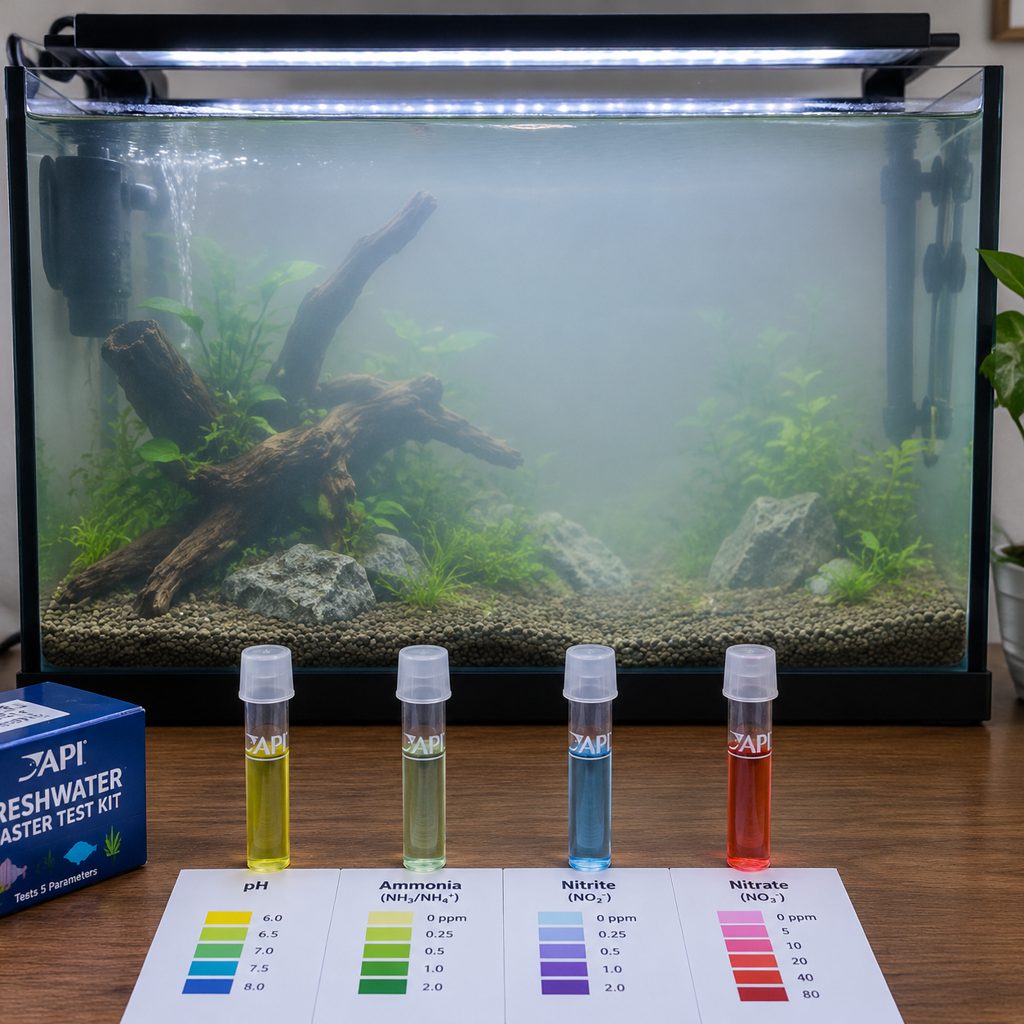
A new aquarium can look crystal clear and still be unsafe for discus. Before adding fish, give the biological filter time to establish bacteria that process ammonia and nitrite. Fishless cycling builds that capacity without exposing livestock to the early spikes. Plan on several weeks, and let test results—not a calendar date—decide when to stock.
What the nitrogen cycle does
Fish waste and uneaten food produce ammonia. One group of nitrifying bacteria converts ammonia into nitrite; another converts nitrite into nitrate. Ammonia and nitrite can harm fish. Routine water changes help remove nitrate, which otherwise accumulates. Clear water tells you nothing reliable about these invisible compounds, so use aquarium tests rather than appearance alone.
Discus are kept warm, and their active metabolism and feeding can put a substantial load on a filter. In a new setup, the bacterial population is not yet ready to process that waste. Cycling gives it time to develop before fish arrive.
Choose an ammonia source made for fishless cycling
In the US, “fishless cycling” is used on purpose-made aquarium products. DrTim’s Aquatics, for example, sells “Ammonium Chloride Solution for Fishless Cycling” and recommends using it with its “One & Only Nitrifying Bacteria.” The supplier provides a downloadable cycling guide and a direct online buying option, so specialty mail order is one way to find the product. The page describes concentration using total ammonia-nitrogen (TAN), a label term you may encounter when checking dosage.
Use the directions for the specific product you have; concentrations differ. DrTim’s directions say 4 drops per US gallon, and the supplier says the solution is generally added three times during a cycle. The care procedure in this guide targets about 2 mg/L-N; its example says 4 drops per US gallon of that product is approximately that concentration. Do not assume the same drop count works with a different solution. Avoid household ammonia containing fragrance, surfactants, or cleaning additives.
A 2–6 week timeline
Establishing the filter bacteria commonly takes 2–6 weeks. Keep the tank fishless while supplying an ammonia source according to its label.
| Timing | What may be happening | What to do |
|---|---|---|
| Week 1 | Ammonia becomes measurable | Set up filter media, add the measured ammonia source, and test ammonia and nitrite every 2–3 days. |
| Weeks 2–3 | Nitrite may peak | Hold the water at 82–86°F (28–30°C) and test ammonia and nitrite daily. |
| Weeks 4–6 | Nitrite falls as nitrate rises | Test ammonia, nitrite, and nitrate every 2–3 days. Once ammonia and nitrite read zero, run a confirmation test. |
These are stages to watch for, not guaranteed deadlines. If ammonia or nitrite remains detectable after six weeks, keep the aquarium fishless and continue testing instead of adding discus to see what happens.
Confirm the filter before stocking
When the regular tests show no detectable ammonia or nitrite, add the same amount of ammonia source used at the beginning. In the procedure above, that is about 2 mg/L-N. Test again after 24 hours. The filter is ready when both ammonia and nitrite are undetectable. Nitrate rising can be consistent with an active cycle, but nitrate alone does not prove the filter can process a fresh ammonia dose. The reference guide notes nitrite at or below 0.1 mg/L as a safety guide; for the pre-stocking challenge, aim for no detectable nitrite.
You can seed a new filter with a portion of mature media from a healthy, established tank, or use a commercial nitrifying-bacteria product. Either can help bacteria establish, but neither replaces the confirmation test. Do not rely on a clear-water appearance or a product promise to certify the aquarium.
Keep a log and stay patient
Record the date, temperature, ammonia dose, and each test reading. A simple log helps show whether nitrite has peaked and whether the cycle is progressing. Continue normal maintenance once discus are introduced, because a cycled filter is only one part of keeping water stable. For water styling after the biofilter is established, see our article on peat and blackwater.
FAQ
Can I add discus the day I use bottled bacteria?
No. Bacteria products may help colonization, but they cannot confirm that your particular filter is processing waste. Wait until ammonia and nitrite are undetectable and the 24-hour ammonia challenge passes.
Why is nitrite still detectable after a couple of weeks?
A 2–6 week cycle is a planning range, not a guaranteed finish date. Keep the aquarium fishless, maintain 82–86°F (28–30°C), and follow the testing schedule. Do not stock by the calendar.
Can I use household ammonia?
Only if you can verify it has no fragrance or other additives; a purpose-made aquarium fishless-cycling product makes dosing instructions clearer. Follow its label rather than copying another product’s drops-per-gallon directions. The US product example discussed here had no confirmed price in the local retail check, so this guide does not quote one.
‹ Back to all articles