 The Discus | Discus Fish Care and Breeding Guide
Wild-Caught vs. Captive-Bred Discus: How to Tell
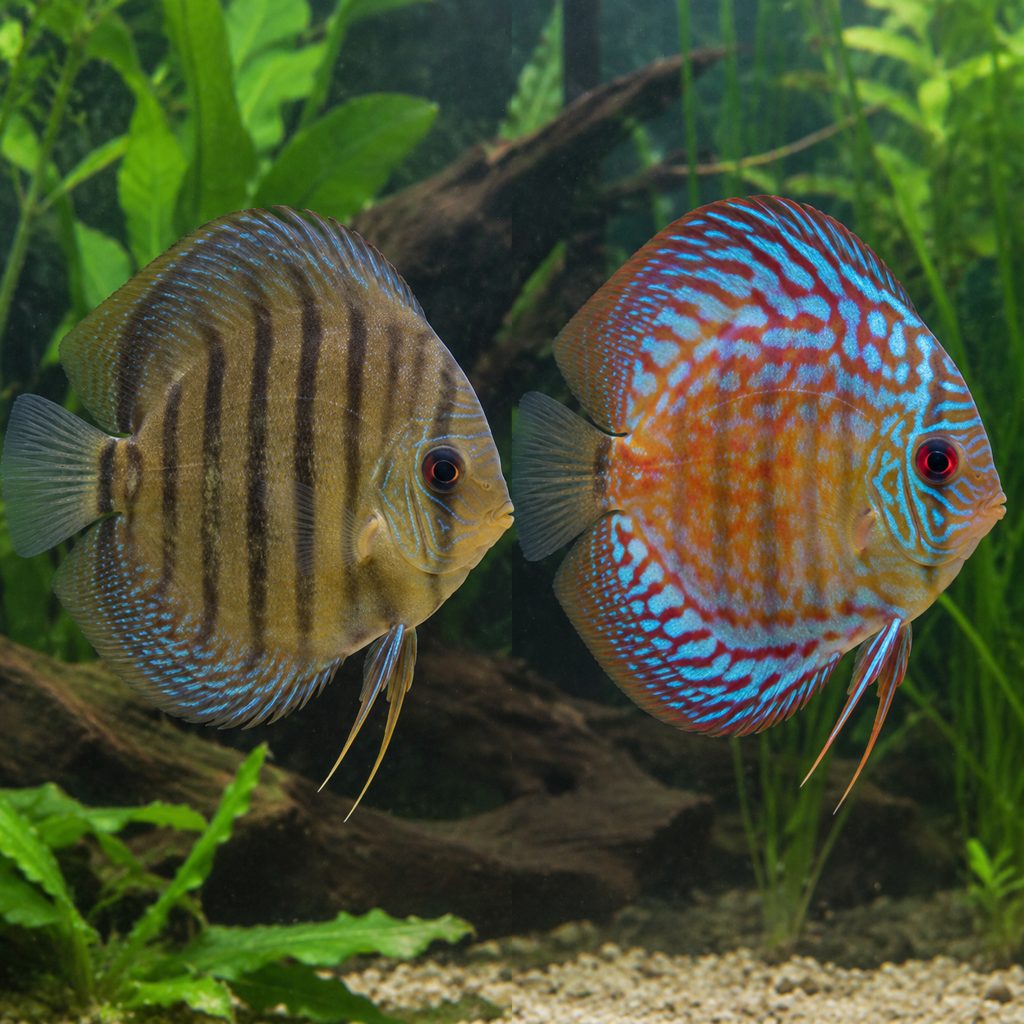
A discus advertised as “wild” might be a fish collected from the Amazon basin, a captive-bred descendant of wild stock, or a domestic fish with a natural-looking pattern. Those are not interchangeable. If origin matters to you, ask the seller what the label means and what records support it. Color or a regional name alone cannot establish where an individual fish was born.
Wild-caught and captive-bred are different claims
Here, “wild-caught” means collected from the Amazon River basin. A fish bred in an aquarium from wild-origin parents is captive-bred, even if its ancestry is recent. Ask for the collection locality, import details, and breeding history where applicable. The words “wild type” can describe appearance rather than collection history, so get the seller to distinguish those terms clearly.
Heckel discus is one familiar English name for a wild-associated type. English-language care writing also uses labels such as red discus and turquoise or gold varieties. These names help describe fish, but they do not authenticate provenance. A seller's documents and history matter more than a color label when you are paying for a particular origin.
Appearance, availability, and what a listing proves
Wild-caught fish are often described as having a rounded, balanced body and more restrained blue or red tones. Captive-bred strains span a much broader range of color, pattern, and body shape, including blue, red, and spotted forms. That is a general contrast, not a reliable identification test; individual fish vary and lighting changes what colors you see.
| What you are comparing | Wild-caught individual | Captive-bred strain |
|---|---|---|
| Body and color | Often described as rounded, with subtler natural tones | Shape and color vary widely by line |
| Availability | Can be limited by collection and shipment | Usually offers a broader range of selectable strains |
| What to verify | Collection locality, import and holding history | Breeder, parent history, and current care conditions |
A U.S. Amazon search in October 2026 showed an online listing titled “Discus, Multicolor & Assorted for Freshwater Aquarium, Medium - Pack of 3” at $249.99 plus $49.99 delivery. The listing did not document wild-caught status or origin; it is not a wild-fish price reference. It verifies an online listing channel, not confirmed local stock or the availability of documented wild discus. No current U.S. listing with both a wild-caught claim and documented collection origin was verified.
Plan for the fish you actually receive
Wild-caught discus may arrive with very different water and transport histories. Ask where the fish came from and what water it is currently kept in. Avoid moving it abruptly to a very different chemistry; acclimate carefully and watch its response. Collection location and individual condition can matter, so do not assume every wild fish needs one identical recipe.
Captive-bred discus may be accustomed to a wider range of ordinary aquarium conditions, but no strain is automatically identical to another. General care references give 82–86°F (28–30°C), or 86–88°F (30–31°C) for juveniles; pH 6.0–7.0; and GH 1–5°dH. Allow roughly 5.3–6.6 US gallons (20–25 L) per adult fish as a stocking reference. These are starting points, not instructions to force a newly acquired wild fish into a different water supply overnight. Ask the seller about its current parameters and adjust gradually while keeping water clean and stable.
A fish described as “pure line” is not necessarily a wild-caught fish. It may mean a line maintained in captivity from particular ancestors. Ask for parent and breeding records if lineage matters. F1 means the first generation from a cross between a wild individual and a domestic strain. F1 offspring can differ according to the parents and the individual; the label alone does not predict temperament, hardiness, or appearance.
FAQ
Which discus is better for a first-time keeper?
A captive-bred fish already accustomed to aquarium conditions may be easier to match to your setup. Individual care still varies. Ask about the fish's current water, food, and health, and get comfortable with stable temperature and regular water changes before taking on a fish with an uncertain collection history.
How should I adjust water for a wild discus?
Get the collection and holding information you can, test your own water, and avoid sudden changes. RO water blended with tap water can help when adjustment is needed, but TDS alone does not show GH or buffering; measure those too. See our article on RO/DI water for discus for a blending approach.
Does F1 mean the fish is easy to keep?
No. It describes a generation—a cross between a wild fish and a domestic strain—not a care rating. The parents and the individual fish determine more than the label does.
Before buying, ask the seller to put the origin claim in writing and explain the evidence behind it. The same habit helps whether you choose a vivid domestic strain or are drawn to the less predictable story of a wild fish.
‹ Back to all articles