 The Discus | Discus Fish Care and Breeding Guide
Penang Discus Farms: What Their History Means Today
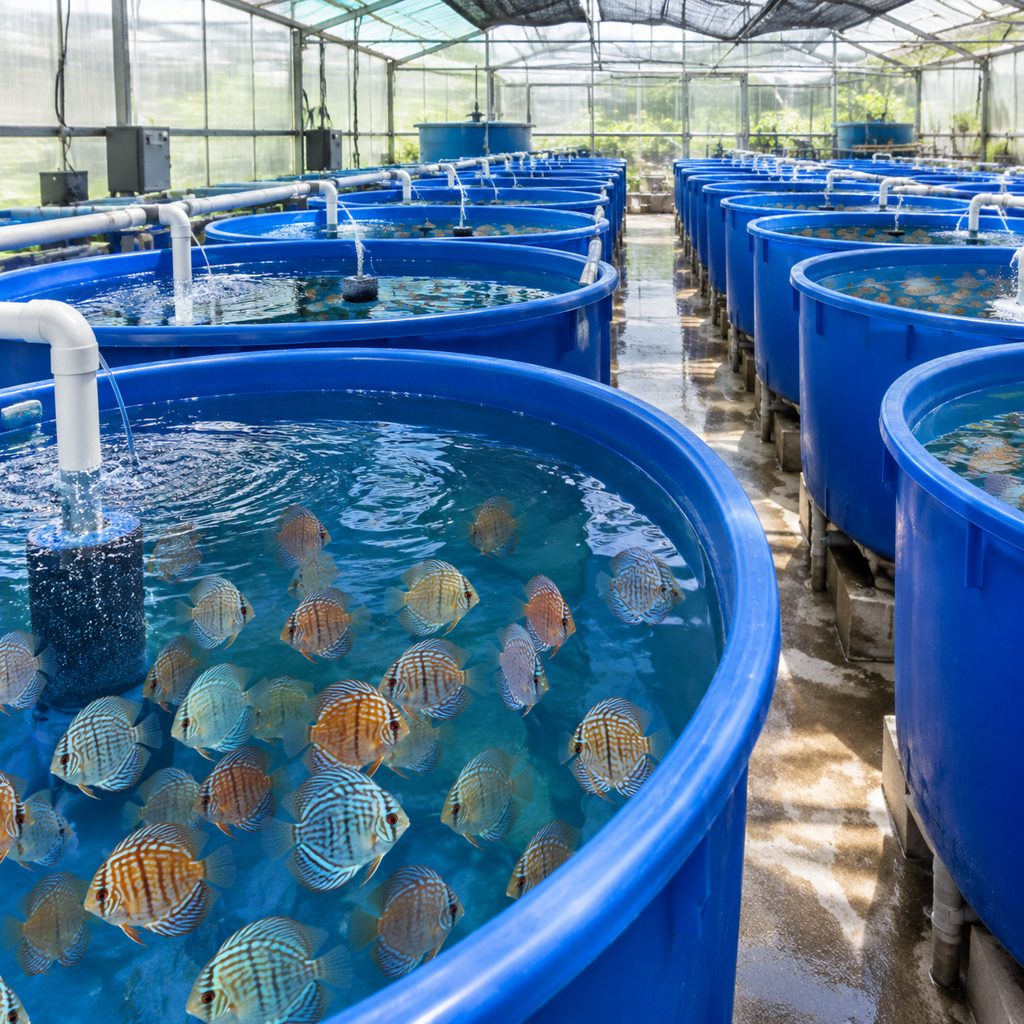
“Penang” on a discus listing sounds like a useful clue. It may point to a breeding location or a line associated with the Malaysian island, but a place name alone does not tell you who bred the fish, who its parents were, or where it was raised most recently. If you are shopping in the United States or elsewhere, treat the label as a conversation starter and ask for records before paying a premium for provenance.
A reported chapter in discus breeding
Penang is often included in accounts of Asian discus breeding during the 1980s and 1990s. Those accounts also name Bangkok and Hong Kong as regional aquaculture and export centers. The broad explanation is that tropical conditions and access to export routes helped breeding businesses cluster in the region. Family-run operations are commonly described as selecting parent fish, pairing them, and choosing color and body shape over successive generations. Japan is also described as one destination for Asian-bred fish.
That history is useful context, but it should not be mistaken for a documented directory of farms or a verified pedigree for a fish in a shop today. The historical outline available here does not provide citations, facility records, named breeders, or evidence tying a specific farm to a specific strain. Current operating farms, export channels, and availability in U.S. stores have not been confirmed. A seller's “Penang” wording cannot fill those gaps on its own.
The longer timeline, with appropriate caution
A broad account of the hobby's development places systematic captive breeding of wild fish in postwar Europe, particularly Germany. It then describes commercial breeding expanding in Asia during the 1970s and 1980s, including Hong Kong, Thailand, and Malaysia. In the 1980s and 1990s, Penang is grouped with other Asian centers during the development of blue, red, and spotted forms.
| Period | Places named in the historical account | Broad description |
|---|---|---|
| After World War II | Europe, especially Germany | Systematic keeping and breeding of wild discus is said to have advanced |
| 1970s–1980s | Hong Kong, Thailand, Malaysia, and other Asian locations | Commercial breeding is described as expanding |
| 1980s–1990s | Penang and other Asian centers | Major blue, red, and spotted breeding lines are said to have developed |
Read this as a high-level narrative, not a precise chronology. The dates and regional attributions are not supported here with independently verified farm histories. It would be misleading to assign a particular modern color strain to Penang without breeder records.
How to evaluate a “Penang” fish
Ask the seller what the name means for that individual: Was the fish bred on Penang, descended from a Penang line, or simply obtained through a seller who uses the label? Request the breeder's name if available, parent information, and any breeding or import documentation. Ask whether the fish is captive-bred and where it has been housed, and request details about its current water and diet. Those answers help you prepare a stable transition even when the fish's deeper ancestry is uncertain.
Do not confuse a regional label with “pure strain.” A provenance claim is only as strong as the chain of records behind it. If a listing does not say how the claim was established, compare the fish itself—condition, body shape, color, and feeding response—rather than treating the place name as proof of quality.
For buyers considering an international purchase, verify the seller's documentation and check current official import requirements before sending money or arranging shipment. Export and import rules were not confirmed for this article, so no claim about a particular route or fish's legal importability should be inferred. Likewise, there is no verified current U.S. price anchor for Penang-bred discus; ask for a written quote that identifies the fish and shipping terms.
FAQ
Can I buy Penang-bred discus in the United States?
The historical label appears in discus discussions, but current U.S. availability of fish with documented Penang breeding was not verified. Ask the seller for breeder and parent records rather than assuming the label guarantees a current import or pedigree.
Does “Penang” prove a fish's bloodline?
No. A location name is not a pedigree. Ask what the seller means by the term and request records that connect the fish to a breeder, parents, or documented line.
Can hobbyists visit a Penang farm?
Some farms may receive visitors, but current operating facilities and visitor policies have not been confirmed here. Contact a facility directly before planning a visit, and do not assume that a breeding operation is open to the public.
For a discus keeper, the practical value of the history is perspective: today's colors and patterns reflect generations of selection across several regions. The label can help frame a question, but careful observation and transparent seller records are what help you choose the fish in front of you.
‹ Back to all articles