 The Discus | Discus Fish Care and Breeding Guide
Best Canister Filter Setup for a Discus Tank
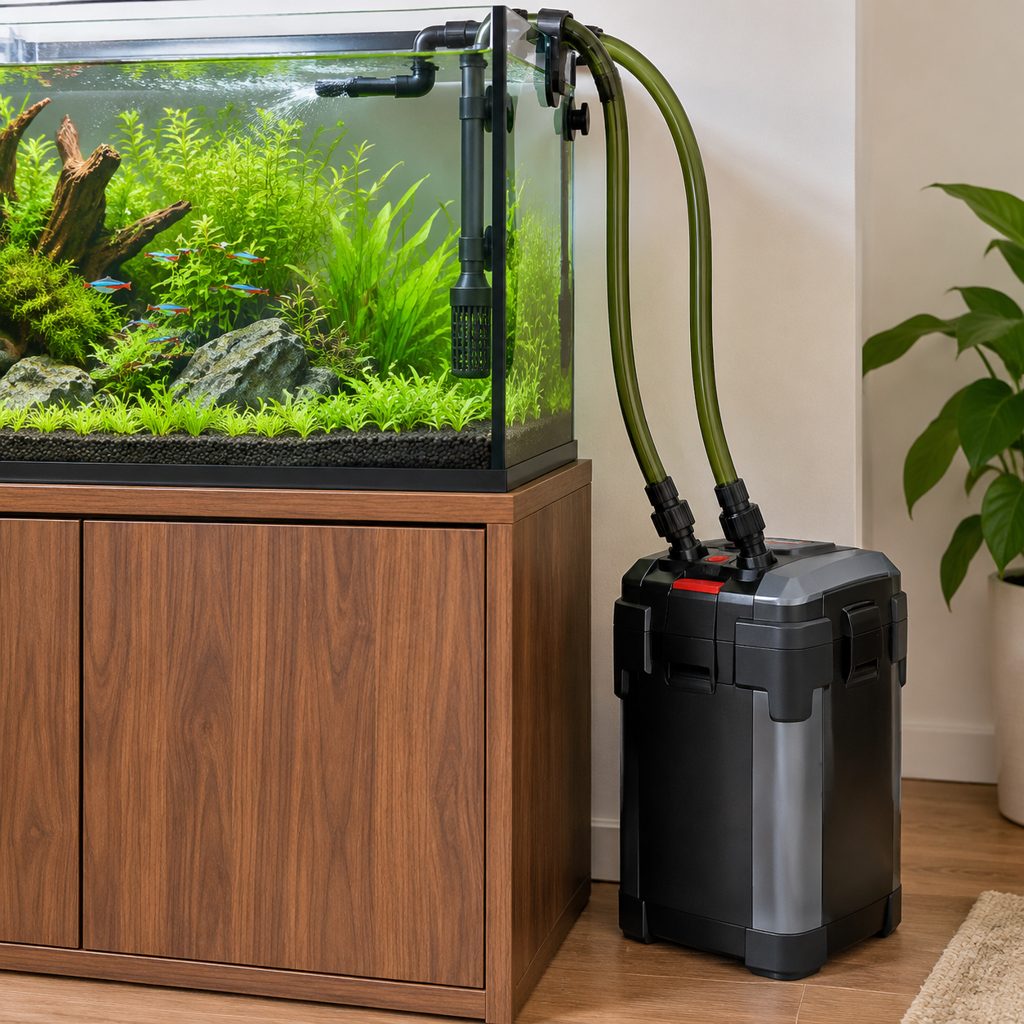
Discus eat well and produce plenty of waste. A canister filter gives you room for mechanical and biological media without taking up much swimming space inside the aquarium. The trick is to size it for the tank, then tame the return so fish have places to rest. A large flow number on a box does not tell the whole story once hoses and media are installed.
Start with the real water flow
A useful starting range in the discus care guidance is a filter flow of three to five times the aquarium's water volume per hour. Treat that as a planning guideline, not a universal U.S. standard: the product listings reviewed here do not establish a discus-specific national norm. Manufacturers may publish a maximum or unloaded rate, and the actual output can fall after media and hoses are added. The care guide estimates a reduction of roughly 20–30%, so leave room for that and check the return after setup.
| Approximate tank class and footprint | Water-volume reference | Starting flow range |
|---|---|---|
| 20-gallon class; about 24 × 18 × 18 in (60 × 45 × 45 cm) | 29–32 US gal (110–120 L) | 106–159 GPH (400–600 L/h) |
| 40-gallon class; about 36 × 18 × 18 in (90 × 45 × 45 cm) | 40–42 US gal (150–160 L) | 159–238 GPH (600–900 L/h) |
The classes are approximate; tank dimensions and actual fill level vary. Use your real water volume rather than the class name when comparing models. If the flow is too forceful, turn or diffuse the return, use a spray bar, or arrange hardscape to create a calmer area. Discus should not have to fight a strong current all day. If debris settles or the output weakens, check the intake and media instead of assuming that a higher-rated canister is always better.
In U.S. listings, the Fluval FX4 is described as a high-performance canister for aquariums up to 250 gallons. That is a product capacity claim, not a guarantee that a single filter is right for every discus system. Listing examples also included the Fluval 107, 207, and 407. Consider tank load, maintenance routine, return flow, and the manufacturer's recommendations together.
Build the media stack around the job
Put mechanical media where incoming water reaches it first. Filter pads or floss catch uneaten food and larger debris before it can clog the biological section. Biological media—such as ceramic rings or bio-balls—provides a surface for nitrifying bacteria that convert ammonia and nitrite into the less toxic nitrate. If fine debris is a problem, a finer pad at the first stage can protect the later media, but it may need more frequent attention.
U.S. product pages use names such as “bio-foam,” “BioMax,” and “filter media.” They also list service kits, spray bars, intake strainers, and output nozzles. Match replacement parts to the exact model; brand vocabulary does not mean every piece fits every canister. Amazon.com was a verified online buying channel for the models and parts in an October 2026 search, but that search did not compare local fish-store prices or establish how common any model is among U.S. discus keepers.
Clean without wiping out the biofilter
Inspect mechanical media about once a month as a starting point. Feed amount, fish load, and how quickly the flow drops should determine the real schedule. Rinse it earlier if visibly dirty or if output weakens; do not clean just because a calendar date arrived if it is still clear.
When you rinse media, use water removed from the aquarium during a water change rather than untreated tap water. Chlorine can harm the bacteria you are trying to preserve. Leave biological media alone during routine cleaning. If it is clogged enough to restrict flow, gently swish only what needs attention in the removed tank water and leave part of the established media undisturbed. Cleaning every piece at once can remove too much bacterial surface at a time.
The care guidance gives a light biological-media rinse at about six-month intervals as a reference, but condition matters more than a rigid date. If the filter is flowing normally, do not disturb it unnecessarily. Reassemble carefully, check the seals and hoses for leaks, and confirm the return is moving water before walking away.
FAQ
Is more flow always better for discus?
No. Strong circulation can make the tank uncomfortable even when filtration capacity is ample. Aim for effective circulation, then redirect or spread the return so fish have calmer water. Watch fish behavior as well as debris and filter output.
Can a hang-on-back or internal filter work?
Yes. A canister is not the only way to keep discus. It can offer substantial media space and convenient access, while smaller systems using other filter types may need closer attention to accumulated waste and more frequent water changes.
How often should I service a canister?
Check the mechanical stage around monthly and clean when it is dirty or flow is reduced. Biological media usually needs little handling; if clogged, rinse gently in old tank water and preserve some established media. Follow the specific filter maker's instructions for opening and restarting the unit.
A U.S. Amazon listing snapshot retrieved in October 2026 showed the Fluval 107 at $150.41, 207 at $159.99, 407 at $256.99, and FX4 at $337.99. These are examples from one online search, not typical or guaranteed prices; confirm current availability and compatible media before ordering.
‹ Back to all articles