 The Discus | Discus Fish Care and Breeding Guide
Discus Tank Heater Guide: Wattage, Placement & Backup
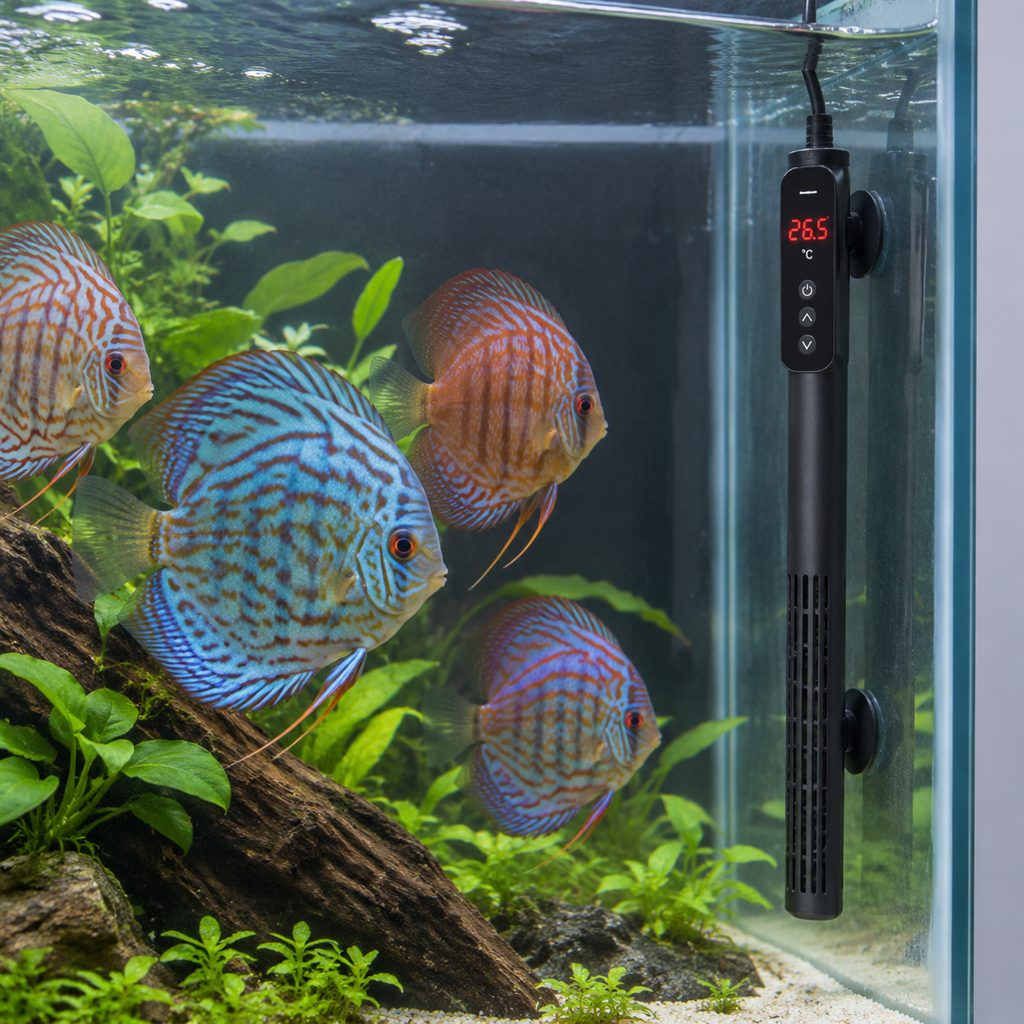
Discus need warm, steady water. For adults, aim for 82–86°F (28–30°C); young fish are commonly kept at 86–88°F (30–31°C). Picking a heater by tank volume alone can leave you short on a cold night. Consider the lowest room temperature, how much water the tank actually holds, and the heater maker’s own capacity chart.
Match heater capacity to the room and aquarium
The figures below translate a common discus sizing guide into U.S. units. The original tank footprints are included for comparison, but a footprint does not tell you the exact filled capacity: glass thickness, waterline, substrate, and tank shape all matter. A 24-inch (60-cm) tank is often grouped in the 20-gallon class, while a 36-inch (90-cm) tank is often grouped in the 40-gallon class. Check the volume of your actual setup and use the manufacturer's room-temperature guidance before buying.
| Approximate tank class and footprint | Water-volume reference | Heater output in the guide |
|---|---|---|
| 20-gallon class; about 24 × 18 × 18 in (60 × 45 × 45 cm) | 29–32 US gal (110–120 L) | 150–200 W |
| 40-gallon class; about 36 × 18 × 18 in (90 × 45 × 45 cm) | 40–42 US gal (150–160 L) | 250–300 W |
These wattages are a starting point from the guide, not a U.S. product standard. If winter room temperature sits well below your target, you may need the upper end of a suitable range. A heated room may need less. Avoid automatically buying the largest heater available: excessive capacity can lead to more frequent cycling or overshooting if the control fails.
U.S. product pages usually describe heaters by wattage and aquarium capacity. For example, a U.S. Amazon listing for a Fluval M 150-watt submersible heater gives a capacity of up to 45 gallons. That label is not a guarantee for every room or tank. Read the exact model's directions and verify water temperature independently.
Thermostat, placement, and daily checks
Use a thermostat-controlled heater, either an adjustable unit with its own control or a heater paired with a separate controller. If you use an external thermostat, make sure its rated output and heater type are compatible with each other. Follow the instructions for orientation, minimum water level, and any guard or suction-cup requirements; never expose a heating element that is meant to stay submerged.
Place an external temperature probe where water circulates, away from the heater itself and stagnant corners. That helps it read the tank rather than a small warm pocket. Keep a separate thermometer in view and compare it with the controller. Discus can react to changes of only 0.9–1.8°F (0.5–1°C), so check for overnight and seasonal swings instead of trusting a dial setting.
Listings in the U.S. use terms such as “submersible,” “adjustable,” and “digital controller,” and specifications are commonly displayed in Fahrenheit. One visible Aqueon listing gave a 68–88°F range. Those words and ranges describe products, not the ideal setting for discus; set the equipment to the fish's needs.
Keep a spare and make water changes safely
A spare heater is useful insurance, especially when a tank depends on one unit in winter. Test the primary and backup before the cold season. If a heater sticks on, unplug it promptly; keep the plug accessible rather than buried behind equipment. For tanks at least 36 inches (90 cm) long, two heaters can distribute the total wattage and leave some heat if one fails. Keep the combined output within the appropriate range, and confirm one controller can safely operate both if that is your setup.
During a water change, switch the heater off before lowering the water. Let it cool before exposing it to air; a hot heater can crack when suddenly removed from water. Wipe algae with a soft sponge. Before turning it back on, confirm it is submerged to the maker's specified level. In summer, a room that pushes water above 86°F (30°C) calls for cooling or room-temperature management, not a higher heater setting. Make sure cooling equipment and the heater are not fighting each other.
FAQ
Should I use two heaters instead of one?
Two units can provide some redundancy on a larger tank, but the total wattage still needs to fit the tank and room. Check that the thermostat is rated for both heaters and place them where circulation can distribute warmth.
How do I choose wattage for a cold room?
Start with the actual water volume and the difference between your room's coldest temperature and the target. Use the heater manufacturer's capacity chart for those conditions. The wattage table above is a guide, not a substitute for the model's rating.
Can I leave the heater on during a water change?
Turn it off before the water level drops below its required submersion depth. Let it cool before removing or exposing it, then restore the water level and check the specified immersion depth before reconnecting power.
A U.S. marketplace search retrieved in October 2026 showed 150-watt examples at $21.59, $36.99, and $45.98 for Orlushy, Fluval, and EHEIM Jager listings. Prices and availability change, and that snapshot is not a market-wide price survey. Amazon.com was a verified online buying channel in that search; local fish-store selection was not compared.
‹ Back to all articles