 The Discus | Discus Fish Care and Breeding Guide
How Much Do Discus Fish Cost? US Prices and Buying Tips
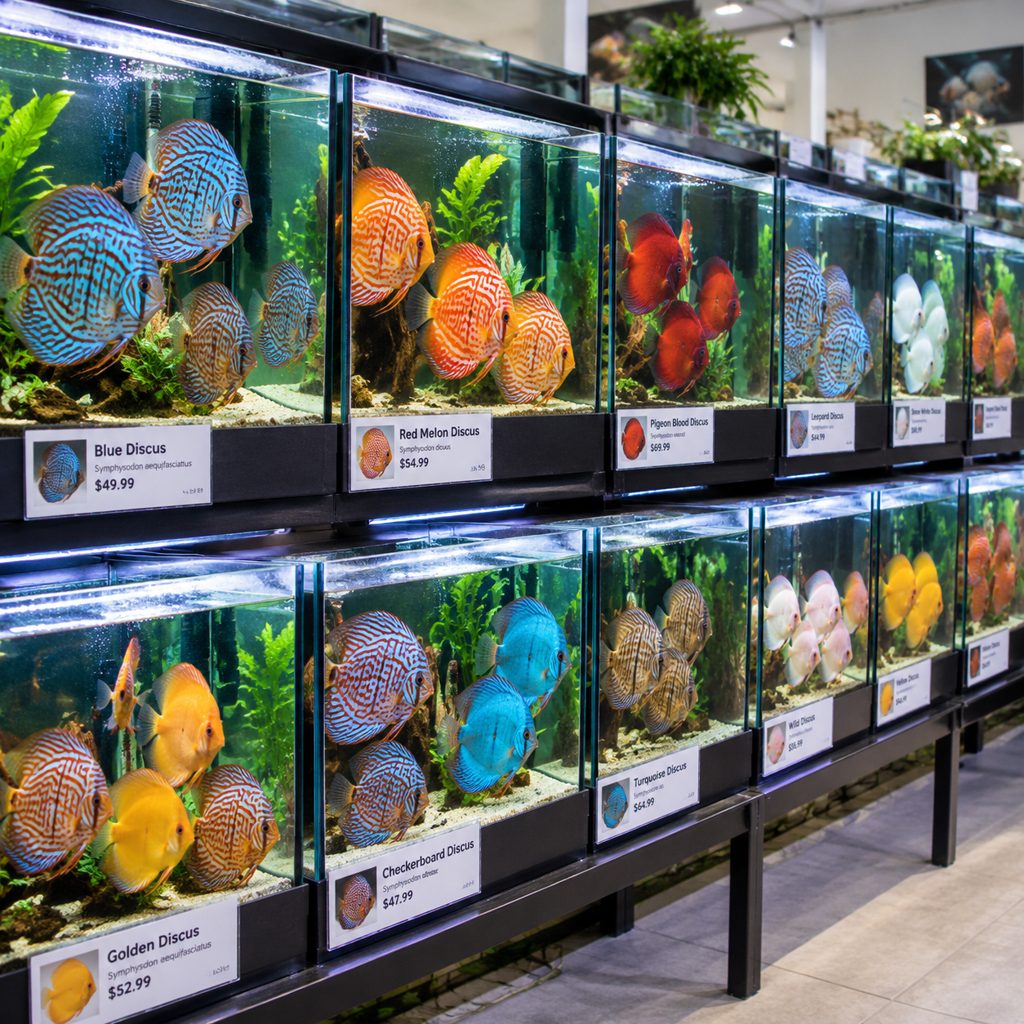
There is no reliable single US price for a discus. A young captive-bred fish, a selected adult, a wild specimen, and a claimed breeding pair are not comparable purchases. Online listings can show what one seller is asking at a particular moment, but they do not establish a national average. Compare fish of similar strain, size, condition, and seller support before deciding whether a price makes sense.
A real listing is an anchor, not a price guide
A Discus.com hybrid-discus category retrieved in October 2026 showed 368 results, with 16 listings on the first page. Options varied by fish. The seller’s Classic Deep Blue Diamond listing showed options from $32 to $155, while Golden Lollipop showed options from $75 to $259.
| Listing example | Displayed range | What the numbers mean |
|---|---|---|
| Classic Deep Blue Diamond, Discus.com | $32–$155 | Seller-specific options on one hybrid listing |
| Golden Lollipop, Discus.com | $75–$259 | Seller-specific options on another hybrid listing |
| Hybrid-discus category | 368 results; 16 on page one | Inventory count at retrieval, subject to change |
These figures came from one online specialty seller and are not a general US price band. Listing options may represent different fish or selections, and inventory and prices can change. The reviewed information did not establish comparable prices across multiple shops, breeder-to-customer sales, shipping, proven pairs, wild-caught fish, or show-grade specimens. Treat any broad price tier built from those missing comparisons with skepticism.
Discus.com presents online categories for hybrid, wild, and other discus, plus breeding pairs and aquarium products. The shop says it breeds some fish and receives overseas shipments. That confirms an online specialty channel offering captive-bred and imported fish; it does not tell you the condition, origin, or provenance of every fish in a listing. Ask the seller about the specific fish rather than inferring details from a category name.
Why two fish can have very different asking prices
Price can reflect strain, body shape, color, size, rarity, and how much selection or growing time went into the fish. Larger fish have usually been raised longer. Shipping, acclimation, quarantine, and the seller’s time also affect what reaches a shop or buyer. Those factors explain possible differences, but they do not prove that a more expensive fish is healthier or a better choice for your aquarium.
A young fish around 3 inches (8 cm) can be easier for a new keeper to manage than a fry around 2 inches (5 cm). The smaller fish may have a lower individual asking price, but growing discus need frequent feeding and diligent water changes. Adult care references include 82–86°F (28–30°C), with weekly water changes around 30–50%; growing juveniles may need at least 30% daily or every other day. Factor the ongoing routine and equipment into the decision, not just the checkout price. Our article on discus care FAQs covers tank planning and maintenance.
How to compare sellers and fish
Compare listings for the same strain and approximate size, and ask what each price includes. Clarify whether the quoted size is body length and how it was measured. A photograph can hide body shape, breathing effort, or whether the fish eats. If possible, watch the fish in person and look from the front and above for symmetry, intact fins, steady breathing, and active feeding. Ask what food it currently accepts, what water conditions it is kept in, and how the seller handles quarantine.
Be especially careful with the word “pair.” Discus.com’s category confirms that US specialty retail uses “breeding pairs” as a product term, but it does not establish that every listing is a bonded, proven pair. Ask whether the fish have spawned successfully together, whether the seller means a confirmed pair or an estimated male/female combination, and what support is available after purchase. Do not pay a premium based on an undefined label.
Online food prices are separate from fish prices. For example, an Amazon listing retrieved in October 2026 showed Hikari Discus Bio-Gold, 2.82 oz, at $14.99. That is a consumable product example, not a fish-price comparison and not evidence that a particular fish is worth more.
Buy for the fish you can care for
A high-priced fish is not necessary for a successful first discus aquarium. Choose healthy, captive-bred fish eating a food you can provide, and make sure your tank and quarantine setup are ready. For wild specimens, premium strains, or a breeding project, seek detailed information about sourcing and current condition. The reviewed data does not verify US prices for wild fish, breeding pairs, shipping, or contest-grade discus, and it does not establish species-specific import rules. Ask the seller and check relevant requirements rather than assuming those details.
Common questions
Are young discus always a better deal?
Not necessarily. Their purchase price may be lower, but fry and small juveniles usually demand more frequent feeding and water changes. A fish around 3 inches (8 cm) may be a more manageable starting point for a beginner.
Does “breeding pair” mean proven breeders?
Not automatically. Ask whether the pair has spawned and raised eggs or fry together, and get the seller’s definition in writing if that distinction affects the price.
How can I tell whether a listing is fairly priced?
Compare similar fish across sellers, check the actual available options, and ask what the price includes. One seller’s range is useful context, not proof of a nationwide going rate.
‹ Back to all articles