 The Discus | Discus Fish Care and Breeding Guide
Discus Fish Care FAQ: Tank Size, Feeding, and Water Changes
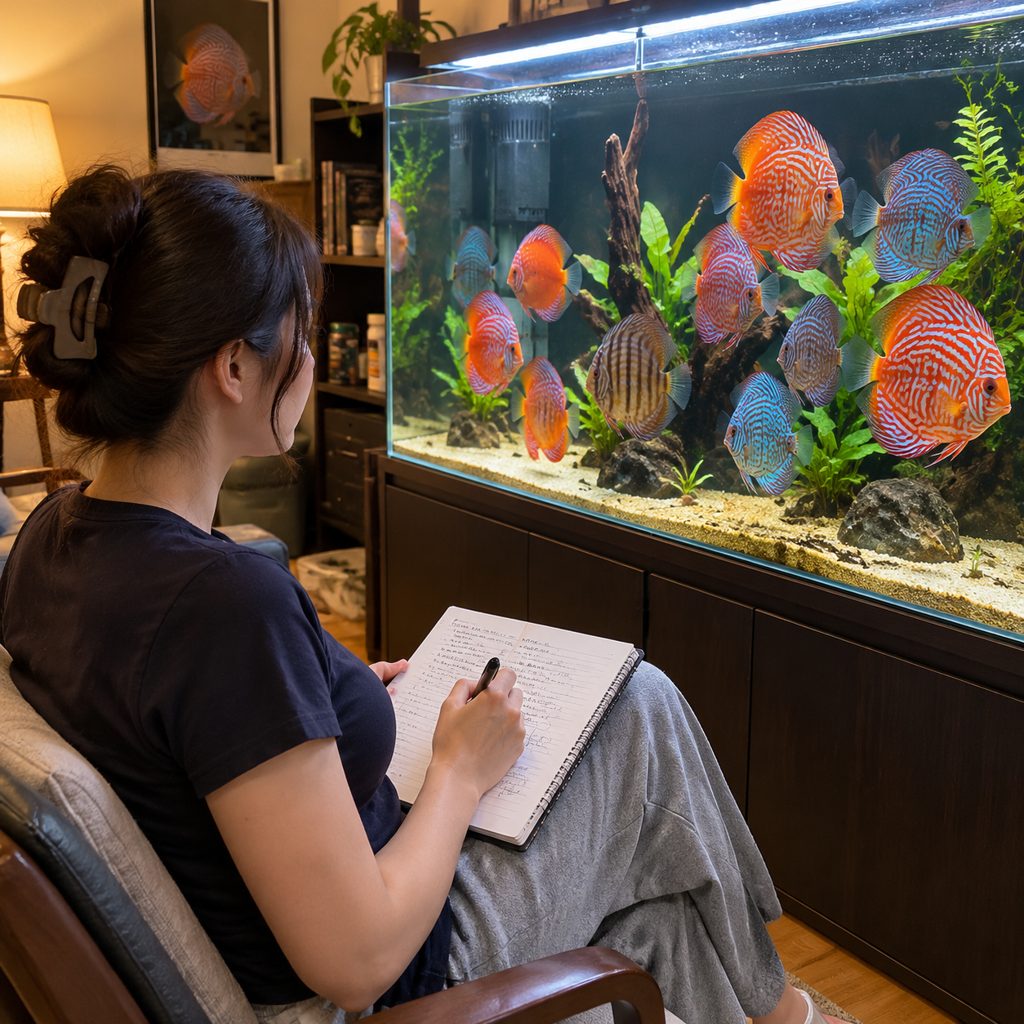
Discus need warm, stable water and a keeper prepared for regular maintenance. The answers below combine practical care references with US product terminology; local tap water, fish size, filtration, and stocking all affect what works in a particular aquarium.
Tank and equipment
How large should a discus tank be?
Adults reach roughly 6–8 inches (15–20 cm). A 20-gallon-class tank is roughly the class associated with a 24-inch (60 cm) aquarium and may house one or two fish in some circumstances, but it is not a great long-term default for a schooling fish. For a group of five or six or more, consider at least a 40-gallon-class setup—the class associated with a 36-inch (90 cm) tank—and size filtration and actual stocking to the fish and equipment. More water volume generally makes stable conditions easier. Tank class is a planning guide, not an exact conversion from length alone.
What temperature should I keep?
A useful target is 82–86°F (28–30°C). Use a heater with a thermostat and a separate thermometer, and check it daily. In summer, air conditioning can cool a tank unexpectedly; in winter, make sure the heater can hold temperature.
Do I need RO water?
Not automatically. Test your tap water first. US aquarium equipment listings commonly use “RO,” “RO/DI,” and “GPD.” An Amazon search retrieved in October 2026 listed an Aquatic Life RO Buddie four-stage, 50-GPD unit at $69.99 and a four-stage, 100-GPD RO/DI system at $89.99. These are changeable listing prices, not a required setup. For mineral-poor water, Seachem Equilibrium is marketed to raise GH; Aquarium Co-Op listed its 1.3-lb size at $17.99 in October 2026. GH and KH are different measurements, so follow the product label and test your water rather than assuming a supplement does both jobs.
How do I make tap water safe?
Use a conditioner labeled for the water supply and follow its own directions. Aqueon’s conditioner page describes treating chlorine and chloramines and detoxifying ammonia and heavy metals; its label dose is 5 mL (1 teaspoon) per 10 US gallons. That amount applies to that product’s instructions, not every conditioner. Match new water temperature and avoid abrupt chemistry changes.
Feeding and routine maintenance
How often should I change water?
A reference for adult discus is 30–50% weekly. Growing juveniles produce more waste relative to their size and may need at least 30% daily or every other day. The right routine depends on stocking, feeding, filtration, and test results. Remove uneaten food and keep a consistent schedule rather than waiting for water to look cloudy.
How many times a day should I feed?
A general care schedule is two or three meals daily for adults and four or five small meals for growing juveniles. Offer what they can finish in a few minutes and remove leftovers. Hikari Discus Bio-Gold is one US-listed sinking discus food; an Amazon listing retrieved in October 2026 showed a 2.82-oz package at $14.99. It is one retail example, not the only suitable food or a feeding prescription.
What if my fish misses a meal?
Look for other changes before assuming disease: breathing, posture, feces, water tests, and whether a new tankmate is chasing it. A new fish can be unsettled by a move, but persistent refusal or weight loss calls for closer assessment. Our article on discus that stop eating walks through the first checks.
Can an adult go without food during a short trip?
For a trip of one to three nights, some keepers leave healthy adults unfed rather than risk an automatic feeder dumping too much food. That is not appropriate for growing fry, juveniles, or unwell fish. Arrange care for those fish. Before leaving, do a routine water change and check that heater and filter are working. For longer trips, ask a reliable person to help or use a feeder tested in advance and set conservatively.
Choosing fish and tankmates
Which discus are a reasonable first choice?
Captive-bred fish already eating prepared foods are often easier to acclimate than wild-type specimens. Commonly sold strains include turquoise, pigeon blood, and blue diamond. Availability and temperament vary; assess the individual fish rather than assuming a strain guarantees hardiness. A young fish around 3 inches (8 cm) can be a manageable starting size. A fry around 2 inches (5 cm) may cost less per fish but needs more frequent feeding and water changes.
Can discus live with other fish?
Sometimes, if tankmates tolerate 82–86°F (28–30°C), compatible soft-water conditions, and a similar pace at feeding time. Cardinal tetras and suitable warm-water bottom dwellers may be considered, but compatibility depends on the specific fish and setup. Quarantine every new arrival in a separate tank for several weeks before adding it, whether it is another discus or a different species.
How long do discus live?
Around 10 years is a reasonable care reference, and some individuals may live longer. Stable temperature, good water quality, and appropriate feeding all contribute; no lifespan is guaranteed.
Before bringing fish home
Set up enough tank volume and filtration before buying, have replacement water ready, and ask what the fish currently eats and what temperature it is kept at. Check local water conditions and plan a quarantine tank. There is no species-specific US legality finding in the reviewed market information, so do not infer a blanket rule from this FAQ; check applicable local requirements with the relevant authority if you need to confirm them.
‹ Back to all articles