 The Discus | Discus Fish Care and Breeding Guide
Discus Diseases: White Spot, Gill Problems, and Hexamita
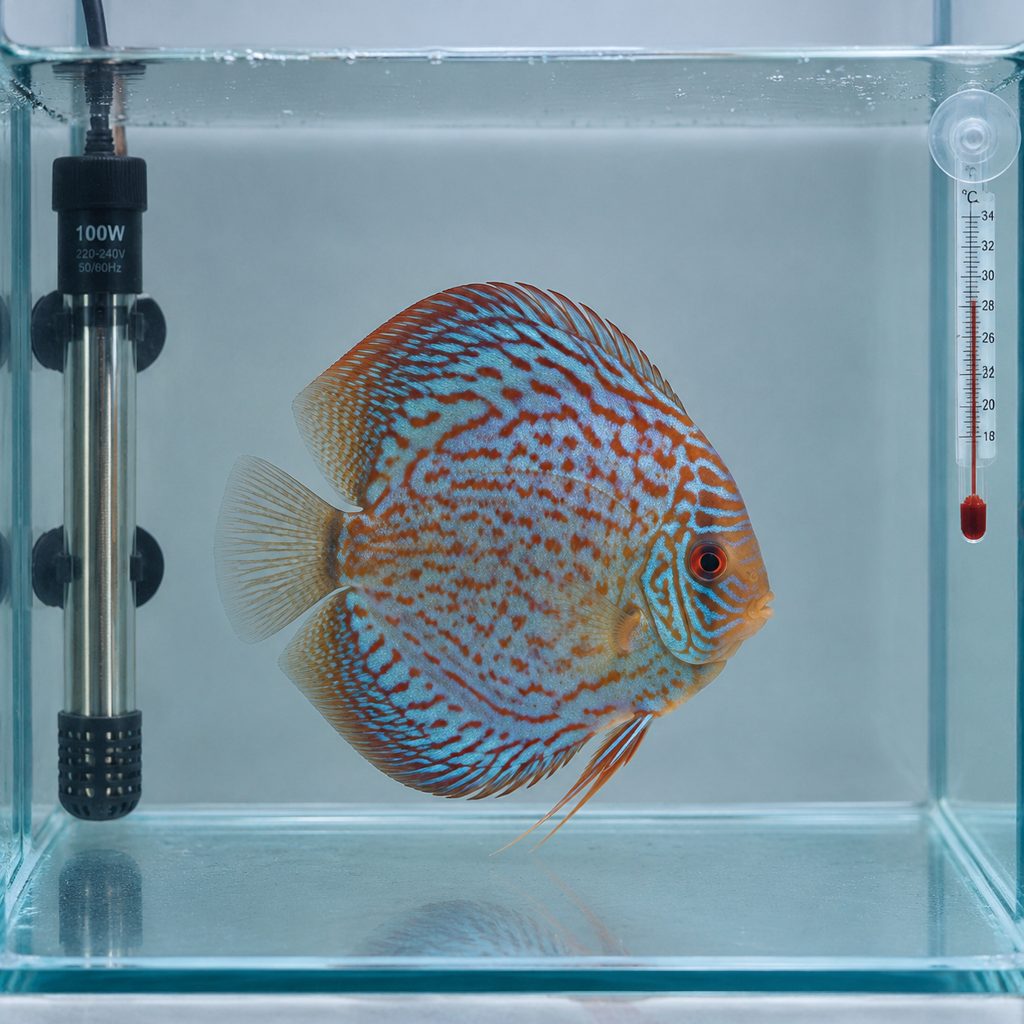
A fish that breathes hard or stops eating needs attention, but a symptom is not a diagnosis. White spots, gill irritation, and pale, stringy feces can have different causes. Check the aquarium and the fish before reaching for medication, and get a fish-health professional involved when signs persist, spread, or worsen.
| Sign | What it may suggest | First checks |
|---|---|---|
| Small white spots on body or fins | White spot disease, often following stress | Temperature history, fish condition, and a reliable diagnosis |
| Rapid breathing or gill covers held open | Gill parasites, poor water quality, or low oxygen | Ammonia, nitrite, aeration, and filter function |
| White feces, appetite loss, or a hollow-looking head | Several possible intestinal or other problems | Water quality, weight, feces, and veterinary advice |
White spots: confirm before raising temperature
White spot disease can produce tiny dots that resemble grains of salt. Temperature drops or abrupt changes during water changes can stress fish, but the spots should still be assessed rather than assumed to be a particular parasite. If the diagnosis is confirmed and the fish can tolerate warming, one approach is to raise temperature by about 1°C (1.8°F) per day until reaching 86–88°F (30–31°C). Warmer water holds less oxygen, so strengthen aeration and watch breathing and activity closely. Do not use this approach automatically on a fish that is already struggling.
Some keepers consider a salt bath alongside other care. A cited concentration range is 0.3–0.5% (3–5 g per liter; about 0.4–0.67 oz per US gallon), but it is not a universal treatment for every fish or tank. Salt can affect tankmates and plants, so a separate container where concentration can be controlled may be preferable. If the fish worsens, stop and seek help. A disease-specific aquarium product should be used only according to its label and with attention to the fish’s condition.
Breathing problems: test the water and oxygen
Gill parasites such as flukes can cause fast, labored breathing or gill covers that stay open. Fish may also gasp near the surface. Ammonia, nitrite, deteriorating water, or inadequate oxygen can look similar. Test the water and check that the filter and aeration are working before concluding that a parasite is responsible. If several fish are affected at once, investigate a tank-wide water or oxygen problem as well.
If parasites are suspected, choose an appropriate product for ornamental fish only after confirming the likely cause. Medication labels and approvals are specific: the FDA’s Approved Aquaculture Drugs list covers named ingredients, products, animals, and uses. Its existence does not mean every listed drug is approved for treating ornamental discus, or that a product sold online is labeled for that use. Avoid improvising doses or combining remedies. Isolate treatment when feasible and protect the biological filter as the product directs.
Pale feces and head lesions need a closer look
Hexamita and other flagellates may be associated with sticky white feces and reduced appetite. But pale feces, weight loss, or a hollow area on the head cannot identify a pathogen on their own. Head lesions have multiple possible causes. Record appetite, feces, breathing, weight, and water measurements, then ask a veterinarian or fish-health specialist to assess the fish.
UF/IFAS guidance for recirculating aquaculture systems, including ornamental fish, recommends confirmation by a fish-health specialist for suspected bacterial disease and culture/sensitivity testing to guide antibiotic choice. It is broad aquaculture guidance rather than a discus prescription. The same guidance prefers medicated feed when a fish will eat; baths are discussed for fish that will not eat or have external infections, with cautions about biofilters, isolation, consultation, and treatment-water disposal. Do not assume a medicine such as metronidazole is approved or appropriate for a discus simply because it is mentioned in hobby discussions; the reviewed sources did not establish its US ornamental-discus labeling or legal status.
Prevention and getting help
Keep discus near 82–86°F (28–30°C) with stable conditions. A reference schedule is a 30–50% water change each week for adults; growing juveniles may need at least 30% daily or every other day. New fish should be quarantined in a separate tank for several weeks. Spend about 30 seconds each day checking breathing, posture, feces, and appetite. These routines do not replace diagnosis, but they can help catch changes early.
The American Association of Fish Veterinarians provides a location-based “Find a Fish Vet” directory for US fish owners. Contact a specialist if symptoms persist, worsen quickly, or appear in multiple fish. Bring notes on when signs began, recent water changes, test results, and any products already used.
Common questions
How long should a salt bath last?
The care guidance gives a range of several days to about a week, but duration depends on the fish and condition. Monitor closely, reduce exposure gradually when appropriate, and stop for signs of distress; get professional advice rather than extending treatment automatically.
Can a head lesion be cured?
The outlook depends on the cause and how advanced it is. A head lesion alone does not establish Hexamita, so assess the fish’s other signs and seek help early.
Should I medicate the display tank?
Some products may harm plants or filter bacteria. A separate treatment tank can limit that impact when practical; always follow the specific label and seek veterinary guidance.
Our article on a discus that stops eating covers how appetite changes fit into the bigger health picture.
‹ Back to all articles