 The Discus | Discus Fish Care and Breeding Guide
Discus Eggs to Hatch: Timing, Temperature, and White Eggs
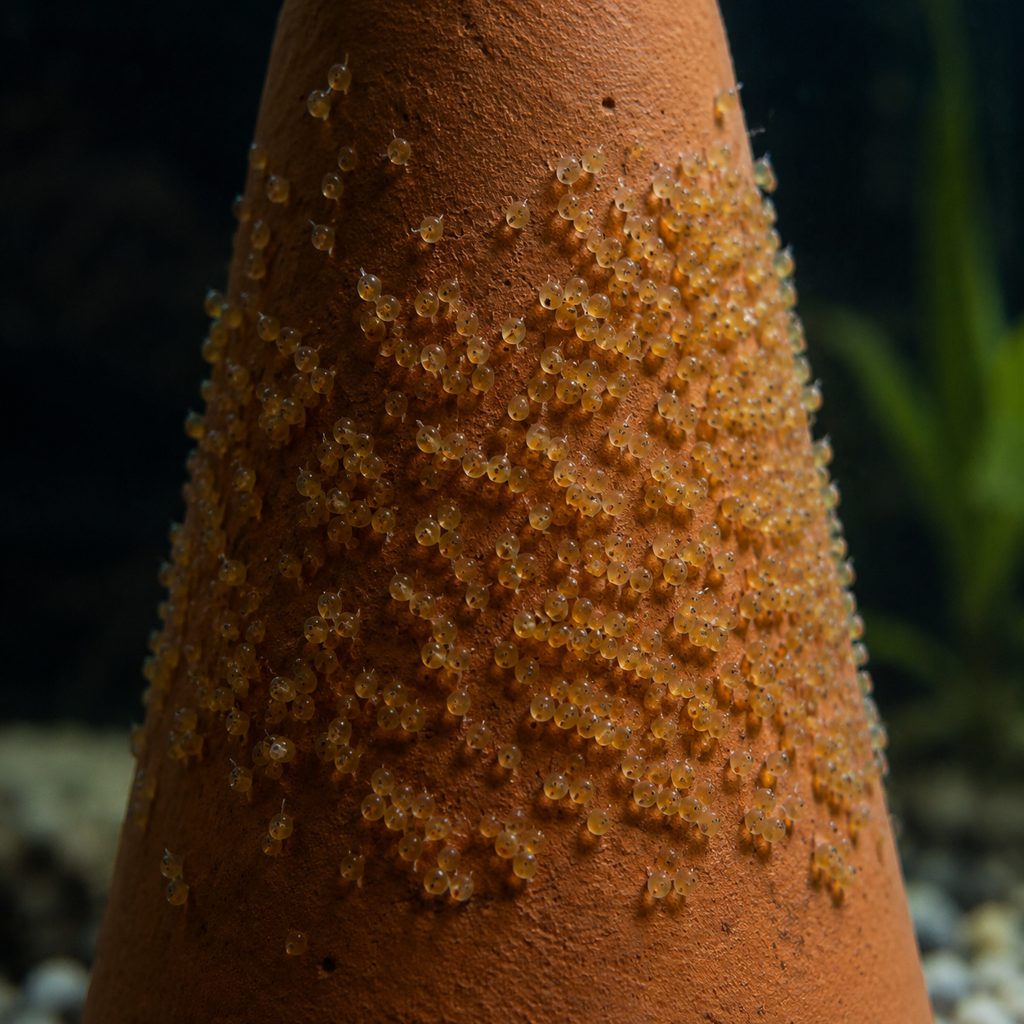
A discus clutch can hatch in just 48–72 hours, so the job after spawning is mostly about keeping conditions steady. Watch the eggs change, monitor temperature, and let the parents fan and clean the clutch if they are caring for it normally. Repeatedly moving the cone or making large water adjustments can create more trouble than it solves.
Follow the clutch through the first days
| Milestone | Typical timing or count |
|---|---|
| Eggs in a clutch | 100–400 |
| Hatching | 48–72 hours at 82–86°F (28–30°C) |
| A pair may spawn again | Every 2–3 days |
| Fry begin swimming | 3–4 days after hatching |
Immediately after spawning, the eggs cling to the cone or other surface. The adults fan them with their fins, moving water over the clutch. Several hours later, fertilized eggs may take on a pale brown color. Eggs that turn cloudy white are commonly unfertilized or affected by fungus. After about a day, dark eyes may become visible inside eggs that are developing.
At 48–72 hours, larvae hatch but cannot swim yet; they remain attached in a cluster near the spawning surface. Once they absorb the yolk sac, they begin swimming around 3–4 days after hatching and rise toward the parents. Cooler water tends to lengthen development and warmer water tends to shorten it, but chasing a faster hatch is not the goal. Stable conditions are safer than abrupt adjustment.
Keep water conditions steady
Aim for 82–86°F (28–30°C). A shift of 0.9°F (0.5°C) is worth noticing when managing a clutch, and sudden temperature swings can contribute to hatch failure. Use a dependable thermostat, check the water with a thermometer, and keep a spare heater available in case the primary unit fails. Watch overnight temperatures as well as daytime readings.
For the incubation period, use pH 6.0–7.0 and GH 1–5°dH as reference ranges. Remove leftover food and debris rather than allowing them to break down near the eggs. pH and hardness do not fully describe breeding water: EC or TDS can help you compare the tank water with what the parents are accustomed to. Do not apply one target blindly; avoid a sudden change from the adults’ familiar conditions.
If the parents are fanning the eggs and removing debris, observation is usually better than intervention. Keep lighting subdued and avoid tapping the glass or lingering in front of the aquarium. Strong light and human activity can stress the adults, while a nighttime temperature drop can affect the clutch.
White eggs and failed hatches
A white egg is generally unfertilized or has developed fungus. Parents may remove affected eggs themselves, but fungus can spread to healthy eggs if white eggs remain. Some keepers gently siphon visibly affected eggs early. If the entire clutch turns white, consider whether the parents were mature, whether the apparent pair may actually be two females, and whether temperature was stable. Review GH and EC/TDS as well as pH; one number alone may not explain the outcome. A pair may need several spawning attempts before it succeeds.
| Setback | Common factor | Response to consider |
|---|---|---|
| Young parents eat eggs | Inexperience or stress | Give the pair further spawning attempts |
| White eggs spread | Unfertilized eggs or fungus | Let parents remove them or siphon affected eggs early |
| Eggs do not hatch | Sudden temperature change | Stabilize temperature with a thermostat |
| Parents eat fry | Stress or changes to the environment | Reduce disturbance and consider separation |
Artificial incubation with aeration and antifungal measures is possible, but it creates a difficult next step. Once they swim, discus fry rely on nutrients from the parents’ skin secretions. Hatching eggs separately does not solve how to raise those fry, so leaving the clutch with attentive parents is generally the straightforward path.
What local hatchery products are for
A U.S.-based retailer, Brine Shrimp Direct, listed a brine-shrimp hatchery dish starter kit at $31.25 in a page retrieved in October 2026. The listing says it includes a hatchery dish, brine shrimp eggs, and spirulina powder. The retailer also publishes English-language “Brine Shrimp Hatching Instructions & Equipment.” That terminology refers to equipment for hatching live food—not to a discus-egg incubator. The checked material did not establish a U.S. artificial discus-egg hatching product, antifungal standard, or local protocol, so do not mistake a live-food hatchery kit for one.
The price is a retailer listing, not a typical market rate, and the product is not needed to let discus parents tend their eggs. If you later need to hatch brine shrimp for free-swimming fry, the dish may be relevant; for the egg stage, focus on stable temperature, clean water, and minimal disturbance. For feeding and parental care after the fry rise, see our article on raising discus fry.
Frequently asked questions
All the eggs turned white. What could be wrong?
They may be infertile or affected by fungus. Young parents, a pair consisting of two females, unstable temperature, or unsuitable breeding-water conditions are possibilities. Compare current conditions with the water the adults know, including hardness and EC/TDS, and give the pair more than one attempt before drawing a conclusion.
Can I hatch discus eggs without the parents?
Artificial incubation with aeration and fungus prevention is possible, but raising the fry afterward is difficult because newly swimming fry need the parents’ skin secretions. A live-food hatchery dish sold for brine shrimp is not a discus-egg incubator.
Should I turn off the aquarium light?
Keep lighting subdued and observe quietly to reduce stress on the adults. Do not ignore the water temperature overnight; a sudden drop can be harmful during incubation.
‹ Back to all articles