 The Discus | Discus Fish Care and Breeding Guide
How to Breed Discus: Pairing, Tank Setup, and Spawning
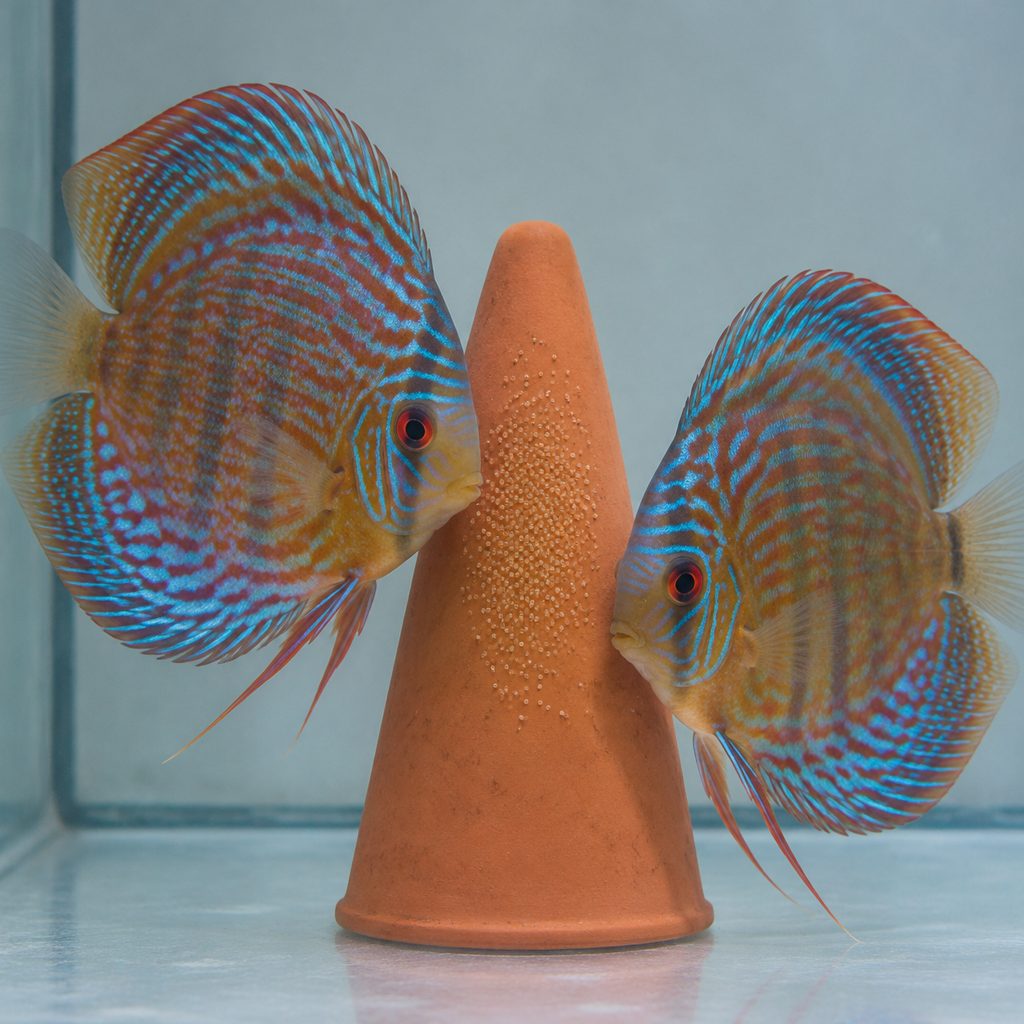
A discus pair cleaning a cone, laying eggs, and later tending fry is a rewarding project—but successful spawning starts before the first eggs appear. The fish need time to mature, a compatible pair, and a stable place to settle. Treat spawning as a process rather than a quick tank upgrade, and expect young parents to need practice.
Start with mature, healthy fish
Depending on growing conditions and care, discus reach sexual maturity at about 12–18 months and around 5.9 inches (15 cm) long. Choose healthy fish with good color and a well-shaped body. Young fish can lay eggs before they are ready to care for them, and may eat the clutch. Let potential breeders mature rather than rushing them into a breeding setup.
Sexing discus by appearance is difficult. Comparing the shape of the reproductive papilla near the vent can offer a clue, but even experienced keepers can be wrong. A practical way to find a compatible pair is to raise a group and let the fish pair naturally. Starting with about six fish improves the chance of a pair forming. Two that stay close and take turns cleaning the same surface may be showing pair behavior, but it is not proof by itself.
Once a pair is established, move it to a dedicated breeding aquarium to reduce conflict with the rest of the group. A specialist U.S. online retailer offers hybrid and wild discus through dedicated product categories, providing a verifiable channel for sourcing potential stock. Its cited listings do not sell or guarantee a breeding pair. No U.S. price for a confirmed pair or breeding equipment was verified, so ask sellers directly about sex, compatibility, lineage, and the fish’s holding conditions.
Give the pair a quiet spawning space
| Setup item | Guide |
|---|---|
| Aquarium | Around 24 inches (60 cm), 20-gallon class; at least 10.6–13.2 gallons (40–50 L) for a pair |
| Spawning surface | Ceramic cone is traditional; PVC pipe can substitute |
| Temperature | 82–86°F (28–30°C) |
| pH | Common breeding range 5.0–6.5; adjust with the pair’s familiar water in mind |
| GH | 1–5°dH |
The listed tank dimensions and capacity are a class guide rather than an exact conversion from length alone. Secure the cone where you can observe it, but do not put the aquarium in a busy spot. Keep lighting subdued, water flow gentle, and disturbances to a minimum once the pair settles.
pH and GH alone do not tell you everything about breeding water. Check electrical conductivity (EC) or total dissolved solids (TDS) as well, and compare with the water the adults already know. Reverse-osmosis (RO) water or blackwater can help prepare soft water, but adjust gradually and watch the fish. Avoid sudden chemistry changes made just to hit a number.
Read the pair’s behavior
A pair that starts picking at and cleaning the cone may be preparing to spawn. The reproductive papillae can offer a further clue: the female’s is typically thicker and shorter, while the male’s is narrow, pointed, and protruding. If these signs are clear, eggs may follow within a few days.
The female lays eggs in small groups on the cone. The male passes over them to fertilize them. A typical clutch contains 100–400 eggs, and a productive pair may spawn every 2–3 days. Afterward, the adults fan the eggs with their fins, keeping fresh water moving across them. Leave attentive parents in peace; frequent changes, bright lights, or activity around the aquarium can unsettle them. For the next stage, see our article on eggs to hatch.
Keep the first attempts manageable
The first clutch may fail, especially with young or inexperienced fish. Egg-eating is a common setback; it does not necessarily mean the pair cannot succeed. Reduce light and activity, maintain stable water, and give them another opportunity. During breeding, clean water still matters. Adult discus may receive a 30–50% weekly water change as a general guide, while breeding setups are often maintained through smaller, more frequent changes. Match replacement water for temperature and pH, and avoid a sharp EC/TDS shift.
There is no U.S.-specific pair-formation or spawning-cone practice established by the local information checked for this guide. The biological and care details here are general discus husbandry, not a claim about a uniquely American technique. No species-specific federal, state, or local breeding restrictions were verified; check applicable rules where you live rather than assuming retail availability settles legality.
Frequently asked questions
Can I buy a proven discus pair?
Sometimes sellers may offer pairs, but sexing is difficult and a listing does not guarantee sex or compatibility. The U.S. specialist listings checked offer fish, not a verified or guaranteed breeding pair. Raising a group and allowing a pair to form is a practical approach for many first-time breeders.
The pair ate its eggs. What should I change?
Young parents often eat eggs. Reduce lighting and disturbance, keep the environment stable, and allow the pair to spawn again. Repeated failure may justify checking pair sex and water conditions, including EC/TDS—not just pH.
How often should I change water during breeding?
The adult guide is 30–50% once a week, but breeding tanks are often managed with smaller, more frequent changes. Match temperature and pH and avoid abrupt shifts in conductivity or TDS.
‹ Back to all articles