 The Discus | Discus Fish Care and Breeding Guide
Albino Discus: Appearance, Care and Buying Tips
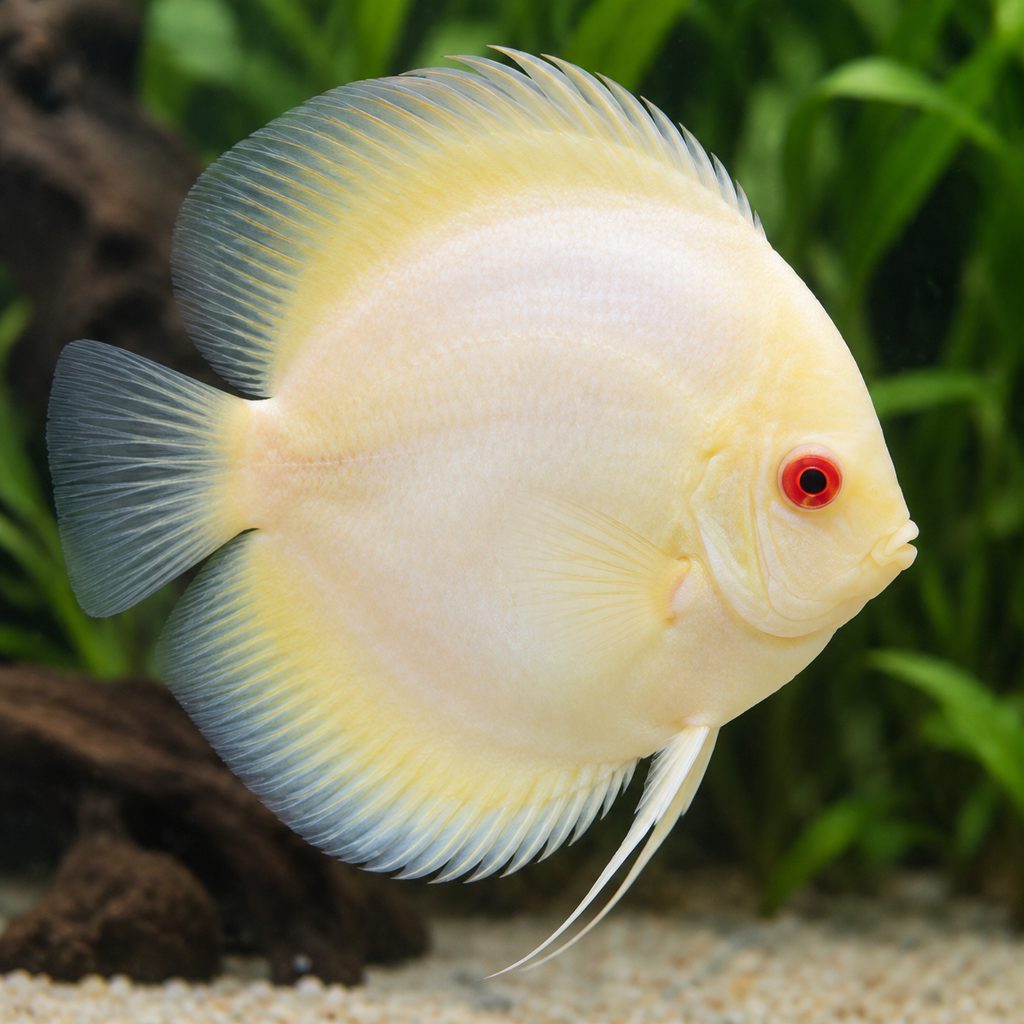
Albino discus stand apart through ruby-red eyes and pale yellow-white or cream coloration. Albinism means melanin is absent; it does not remove every pigment. Yellow tones and markings can remain, so the body color depends on the line and individual fish. An “albino” label describes a trait that can appear in several domestic strains, not one uniform color pattern.
Appearance and lifespan
The red eye comes from blood vessels showing through without melanin pigment. The body may range from yellow-white to cream, and two albino lines can look quite different. As with other discus, adults reach 6–8 inches (15–20 cm). A deep body with a rounded outline is generally preferred. With appropriate care, discus may live more than 10 years.
Because reduced pigmentation can affect an individual’s response to light and vision, watch the fish rather than making assumptions from eye color. Some albino fish dislike strong light. Provide shaded areas with driftwood or plants and start with subdued illumination, adjusting based on how the fish behaves. Difficulty finding food or repeated collisions with objects deserve attention; light response alone does not establish the extent of any vision issue.
Domestic discus care parameters
Albino fish follow the same basic range as other domestic discus.
| Parameter | Target |
|---|---|
| Adult temperature | 82–86°F (28–30°C) |
| Juvenile temperature | 86–88°F (30–31°C) |
| pH | 6.0–7.0 |
| General hardness | 1–5°dH (dGH) |
| Adult water changes | 30–50% weekly |
| Juvenile water changes | At least 30% daily or every other day |
Acclimate a new fish gradually and avoid abrupt changes in water conditions. Size the aquarium for the adult fish and the group, with enough filtration to keep water stable. The Japanese guide mentions 5.3–6.6 US gallons (20–25 L) per fish and 4–5 discus in a 24 × 18 × 18-inch (60 × 45 × 45 cm) aquarium, but explicitly warns against using those figures alone to set a stocking number. That tank is in the 20-gallon (about 75 L) class; its full geometric volume is about 32 gallons (121 L), and equipment and substrate reduce the actual water volume. Aqueon’s U.S. care guide recommends at least 75 gallons (about 284 L) for adult discus and prefers a tall aquarium. Plan around adult size, the group, filtration and water changes.
Finding an albino in the U.S.
Albino is not always the full catalog name. Discus.com lists Albino Pearl Diamond, Dark Base ($75–$213), Albino Platinum ($101–$170), Albino Rafflesia ($86–$170) and Albino Red Golden Melon ($98–$201). These are one U.S.-facing retailer’s displayed price ranges in October 2026, not a market-wide average. Its pages did not specify which size or grade maps to each price point or confirm stock for every option at the time checked. They show the variety of names a buyer may encounter, not a quantified general albino premium.
Ask which fish is currently available, what size the selected price covers and whether the seller can provide recent photos. Confirm shipping to your location and check applicable local requirements; a retailer listing by itself does not establish universal shipping eligibility. The seller’s listing ranges are more useful as a starting point for questions than as a budget guarantee.
When inspecting an individual, look for a clear red eye without cloudiness, even pale-yellow tone, a rounded body, intact fins and calm breathing. Confirm the fish responds to food. Color variation between strains is expected, so focus on overall condition rather than expecting every albino to match a single ideal shade.
Frequently asked questions
Do albino discus have poor eyesight?
The absence of melanin can affect vision, but the degree varies by individual. Do not infer eyesight from a reaction to bright light alone. Watch for difficulty finding food or collisions, offer shaded retreats and adjust lighting to the fish’s behavior.
Do albino discus have a shorter lifespan?
Not necessarily. With appropriate care, they may live more than 10 years, as other domestic discus can. Consistent temperature, water quality and feeding still matter.
Can albino discus live with other varieties?
Yes, domestic discus share the same basic temperature and water targets. Ensure the aquarium has enough capacity and filtration, quarantine new fish, and arrange shaded areas so the albino can retreat from direct light.
What happens if two albino discus are bred together?
The inheritance pattern makes albino traits more likely among offspring from an albino pairing. Breeding plans should take the specific line and traits into account rather than assuming every fish will be identical.
‹ Back to all articles