 The Discus | Discus Fish Care and Breeding Guide
Pigeon Blood Discus: Color, Peppering and Buying Tips
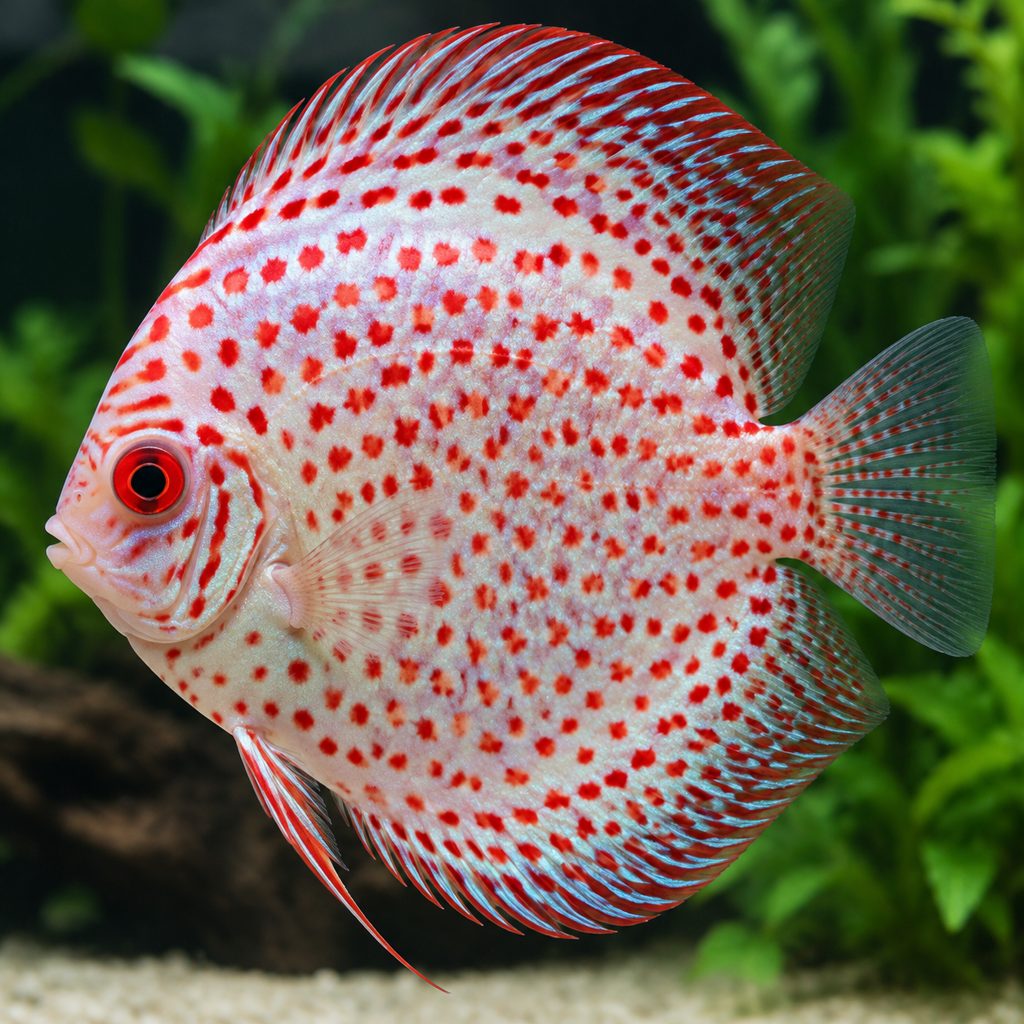
Pigeon Blood discus have a warm orange to orange-red base, often scattered with small black spots called “pepper.” The strain has roots in Thai breeding lines. Peppering varies from fish to fish, and the pattern can look different as a fish grows or its condition changes. Some keepers prefer a lightly peppered body; others see the spots as part of the variety’s character.
What to look for in the pattern
A strong, even base color is commonly valued, but the amount and placement of pepper is a matter of taste. Spots may run from the head onto the fins. Do not assume they can be removed with diet or water conditions: pepper is a genetic pattern, although its appearance can change with growth and condition.
Pigeon Blood have the same disk-shaped form as other discus. Adults reach 6–8 inches (15–20 cm), and a deep-bodied fish with a near-circular outline is generally preferred. Check the forehead and fin development too. If you want a particular balance of orange and black, compare fish in person or ask for recent, clear images of the actual individual rather than relying on a strain name alone.
Care follows the domestic discus routine
Pigeon Blood discus do not have a separate care range from other domestic varieties.
| Parameter | Target |
|---|---|
| Adult temperature | 82–86°F (28–30°C) |
| Juvenile temperature | 86–88°F (30–31°C) |
| pH | 6.0–7.0 |
| General hardness | 1–5°dH (dGH) |
| Adult water changes | 30–50% weekly |
| Juvenile water changes | At least 30% daily or every other day |
Keep the temperature and water quality steady, and do not use the color variety as a reason to change basic husbandry. During the juvenile stage, frequent water changes and appropriate nutrition support growth. Adults still need a consistent maintenance routine. The Japanese care guide gives 5.3–6.6 US gallons (20–25 L) per fish and mentions 4–5 discus in a 24 × 18 × 18-inch (60 × 45 × 45 cm) aquarium as a reference only. That is a 20-gallon (about 75 L) class tank by common sizing; its full geometric capacity is about 32 gallons (121 L) before substrate and equipment reduce actual water volume. Do not treat either number as a stocking prescription. Aqueon’s U.S. care guide recommends at least 75 gallons (about 284 L) for adult discus and prefers tall aquariums.
U.S. catalog names and a price example
A U.S.-facing listing may use a specific line name instead of simply “Pigeon Blood.” Discus.com lists “Yellow Pigeon Blood Discus” and includes Pigeon Blood in its hybrid-discus category. The product page displayed a range of $63–$193 in October 2026. It has selectable options, and the listing did not establish which size or grade corresponds to each price point. Treat this as one seller’s example, not the going rate for every Pigeon Blood discus. The category page does not provide a separate price for the generic variety name.
The listing does not confirm broad availability or shipping eligibility in every location. Ask the seller which fish and option the price refers to, whether it is currently available, and how it will be shipped. Check local requirements that apply to your own location; an online listing is not proof of universal shipping eligibility.
At the store or from the seller’s current photos, look for calm breathing and a fish that responds to food. Compare base-color intensity and pepper placement, but do not let pattern distract from body condition. If the seller can provide information about its feeding routine and water conditions, use that to plan a careful transition.
Frequently asked questions
Is peppering a defect?
No. It is a characteristic of Pigeon Blood, and preferences differ. Choose the pattern you enjoy while still checking color, shape and health.
Can the black spots fade away?
Not reliably. Peppering is genetic, although its appearance can vary with growth and condition. If you want less pepper, choose a lightly peppered fish rather than expecting husbandry to erase it.
Can I keep Pigeon Blood with Blue Diamond discus?
Domestic varieties share the same general care targets, so they can be kept together if tank capacity, group needs, filtration and maintenance are adequate. Quarantine new arrivals before adding them to the display.
Is Pigeon Blood a good first discus variety?
The variety itself does not need a special care routine. A first-time keeper should be ready for warm water, suitable adult tank capacity and regular water changes; color choice does not reduce those responsibilities.
‹ Back to all articles