 The Discus | Discus Fish Care and Breeding Guide
Best Tank Mates for Discus: What Can Live Together?
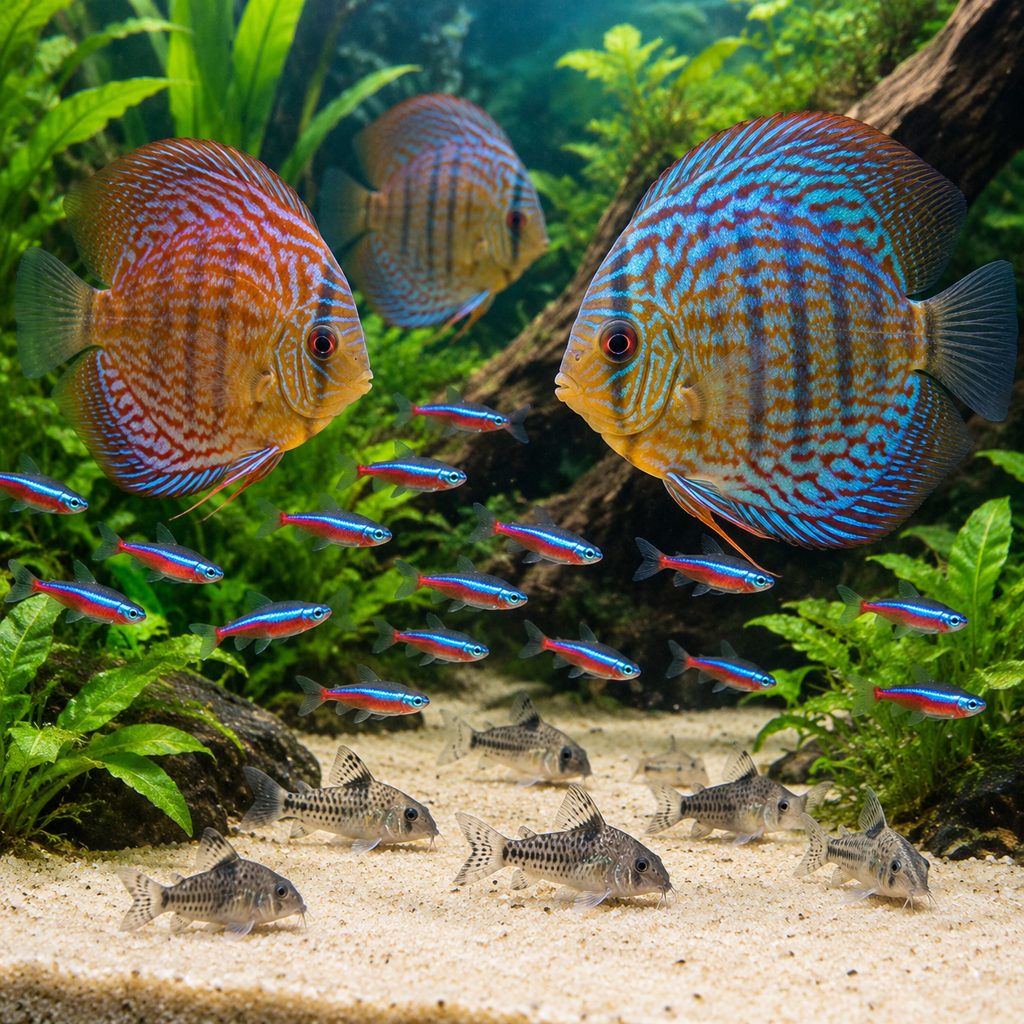
A school of tetras can bring movement to a discus aquarium, and a bottom-dweller may use space the discus leave open. But a fish being labeled “peaceful” is not enough. It must handle warm water, avoid pushing discus away from food, and suit the aquarium’s filtration and maintenance schedule.
Check temperature, temperament and adult size
Adult discus are generally kept at 82–86°F (28–30°C); juveniles may need 86–88°F (30–31°C). The candidate’s long-term temperature range should overlap, not just tolerate a brief warm spell. Discus are deliberate eaters, so fast or aggressive tank mates can dominate feeding or damage fins. Adult discus reach 6–8 inches (15–20 cm). Fish around 1.2 inches (3 cm) or smaller may be swallowed, while large predators can attack or outcompete them.
An adult discus setup also needs room. Aqueon’s U.S.-oriented discus guide recommends an aquarium of at least 75 gallons (about 284 L) for adults and prefers a tall tank. That is the local care-guide baseline; it is not a universal compatibility guarantee. Plan for the full adult group, tank mates, filtration and the water changes you can sustain before buying fish.
Candidates named in U.S. care guidance
Aqueon lists cardinal, neon, emperor and rummynose tetras as possible discus tank mates. It also names clown loaches and dwarf cichlids such as rams and Apistogramma, describing its listed fish as tolerating discus-required temperatures and water conditions. Treat these as candidates to research, not an automatic promise that every individual will fit every aquarium.
| Candidate | What to consider |
|---|---|
| Cardinal tetra | A familiar schooling option; quick feeding can compete with slower discus |
| Neon tetra | Named in U.S. care guidance; check that the specific group suits the actual temperature maintained |
| Emperor tetra | Another schooling candidate; provide enough space and watch feeding behavior |
| Rummynose tetra | A schooling fish listed as a possible match; observe for stress and competition |
| Rams or Apistogramma | Dwarf cichlids named as options; territorial behavior can vary, particularly around breeding |
| Clown loach | Listed as a possibility, but plan for adult size and suitable aquarium capacity before choosing one |
The Japanese care list also suggests bristlenose plecos (Ancistrus) and Sterbai corydoras, but the U.S. reference used here did not verify those specific recommendations. Do not treat them as locally confirmed matches: check species-specific temperature needs and observe behavior. A pleco should have hiding places and its own food; some individuals may attach to discus at night. Corydoras species differ in heat tolerance, and sustained temperatures near the top of the discus range can be a concern.
Fish better kept elsewhere
- Angelfish: They are popular Amazonian cichlids, but sharing a tank with discus is generally discouraged because of possible pathogen transfer and competition for food and territory.
- Aggressive cichlids: African cichlids, for example, have different water and temperature preferences and may be too combative.
- Very small fish: A fish around 1.2 inches (3 cm) or less can be prey for an adult discus.
- Large predators: They may attack discus or take food from them.
- Cool-water fish: Goldfish and medaka do not match the warm-water needs of discus.
Introductions, feeding and quarantine
Quarantine new arrivals in a separate tank before they enter the display. This is a practical way to reduce disease introduction, and it also gives you time to confirm that a newcomer is eating and behaving normally.
One approach is to establish suitable tank mates first, then add discus once the aquarium has settled. Keep an eye on the feeding area: scatter a small amount for quick tetras first, then offer discus food where you can see whether the discus are eating. Watch plecos after lights out as well as during the day. If any fish chases, nips or repeatedly excludes another from food, be prepared to separate it.
Do not use a simple gallons-per-fish formula as a stocking verdict. One rough guideline is 5.3–6.6 US gallons (20–25 L) per adult; the Japanese care guide also cites 4–5 fish in a 24 × 18 × 18-inch (60 × 45 × 45 cm) aquarium, a 20-gallon (about 75 L) class setup. It notes that this tank holds about 32 US gallons (121 L) when full, with less actual water after substrate and equipment. Those figures are not a stocking prescription: adult size, group needs, tank mates, filtration and water-change frequency all matter. Aqueon’s U.S. guide recommends at least 75 gallons for adults, a more useful starting point for planning.
Frequently asked questions
Can discus live with angelfish?
They are generally best kept separately. Pathogen transfer, food competition and territorial overlap are reasons to avoid treating the pairing as routine.
Which tetras are named as possible discus tank mates?
Aqueon’s U.S. care guide names cardinal, neon, emperor and rummynose tetras. That list is not a guarantee for every setup; match the maintained temperature and check that all fish get food.
Are corydoras suitable at 86°F (30°C)?
It depends on the species and how long the temperature is maintained. The U.S. reference cited here does not confirm the specific corydoras recommendation, so verify the exact species’ range rather than assuming it will thrive at the top of the discus range.
‹ Back to all articles