 The Discus | Discus Fish Care and Breeding Guide
Can You Keep Aquarium Plants with Discus?
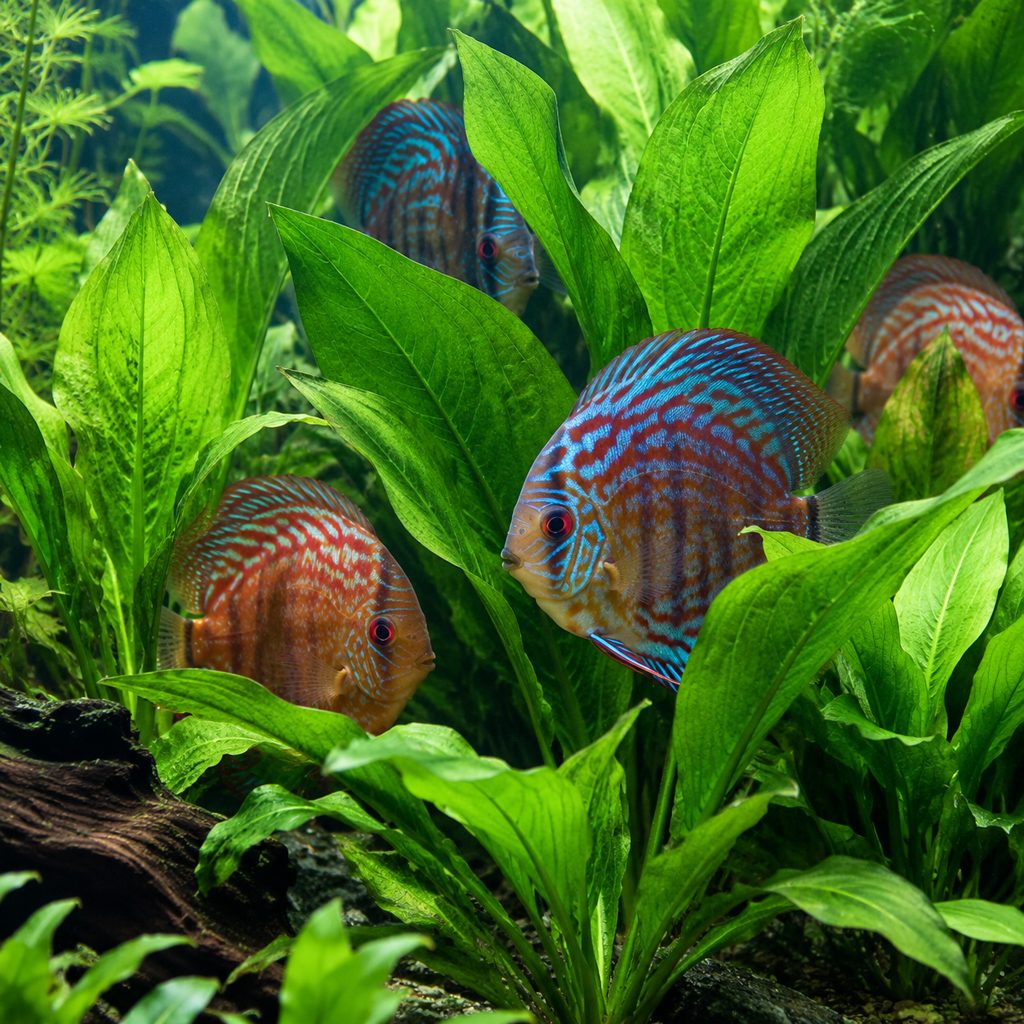
A discus aquarium can have plants without becoming a high-tech aquascape. The easiest route is to keep the fish’s routine intact and add a few plants that can grow attached to wood or rock. That means fewer delicate roots to disturb, less substrate to clean, and no need to chase a lush carpet under conditions that may not suit it.
Build around the fish’s water and maintenance
Domestic discus are generally kept at 82–86°F (28–30°C); juveniles may be held at 86–88°F (30–31°C). Many aquarium plants are commonly grown around 77°F (25°C), so sustained warmth can slow or damage plants that are not heat tolerant. A plant surviving the first weeks is not proof it will thrive long term at discus temperatures.
For domestic strains, the usual water targets are pH 6.0–7.0 and 1–5°dH general hardness (GH). Some plants that prefer harder water may not suit that range. Adult discus grow to 6–8 inches (15–20 cm) and nose through the bottom while searching for food; fine foreground plants can be uprooted. Adults also need 30–50% water changes weekly, while juveniles need at least 30% daily or every other day. A layout should leave room to siphon and work around hardscape.
Tank size matters as much as plant choice. Aqueon’s U.S.-oriented discus guide recommends 82–86°F for discus and notes that wild Heckel discus may prefer close to 90°F; that higher figure is not the target for domestic strains. The same guide recommends at least 75 gallons (about 284 L) for adults, prefers tall aquariums, and recommends sand or smooth fine-to-medium gravel. These are useful U.S. care references, not a promise that any particular stocking plan or planted design will work. Keep open swimming space and make sure the maintenance routine remains practical.
Plant candidates for a low-fuss start
These are options identified in discus-keeping guidance, not a guarantee of long-term success in every tank. Temperature response varies by plant and setup. Add one or two first, then watch for healthy new growth before expanding the planting.
| Plant | Why keepers consider it | Placement idea |
|---|---|---|
| Anubias nana | Tough leaves and commonly grown in lower light | Attach to wood or rock in the foreground or midground |
| Java fern (Microsorum) | A shade-tolerant rhizome plant that can be kept above the substrate | Fasten to driftwood in the midground |
| Anubias barteri | Larger leaves make a more substantial feature | Attach to a larger piece of wood toward the middle or back |
| Bucephalandra | An attached plant with varied underwater foliage | Secure to a rock or branch in front or midground |
| Heat-tolerant Cryptocoryne | Some species suit soft, slightly acidic water; species differ | Try in a pot so it can be moved if it struggles |
Delicate carpeting plants such as Glossostigma have a difficult combination to overcome: warm water and a fish that noses through the substrate. Fast-growing stems such as Rotala can ask for substantial nutrients and CO₂, which adds another routine alongside frequent water changes. High-light and CO₂-dependent species are possible projects, but they bring more equipment and tuning than attached, shade-tolerant plants.
Choose a substrate you can keep clean
Aquasoil is not automatically off limits. Products differ, and the pH effect also depends on the buffering capacity of the water. If you use it, test after setup and monitor whether the aquarium remains in the pH 6.0–7.0 range. A planted substrate can also trap waste and make cleanup more involved.
Three setups are worth considering:
- Bare bottom with attached plants: easiest to siphon and a sensible choice when discus care comes first.
- Sand or smooth gravel with attached plants: gives a natural floor while keeping plants out of the fish’s digging path. Aqueon’s U.S. guide also names sand or smooth fine-to-medium gravel as substrate options.
- Aquasoil with rooted plants: for keepers who prioritize planting. Test pH after introducing it and preserve the normal water-change schedule.
Start with low-to-moderate light. Attached rhizome plants often do not need intense illumination, and this kind of simple layout generally does not require injected CO₂. If algae control leads you to consider a pleco, choose a species whose temperature needs fit the tank and observe how it behaves around discus.
Buying plants across borders
Local plant stock and prices were not confirmed for the species above, so check with a local fish store or aquatic-plant specialist for current availability and the plant’s care range. If you are importing live plants into the United States, USDA APHIS says requirements depend on the commodity and country of origin and directs importers to its ACIR database. That general guidance is not a permit determination for a particular aquarium plant; check the exact plant and origin before ordering.
Frequently asked questions
Do I need CO₂ injection in a discus tank?
Not for a simple layout centered on attached, undemanding plants. Begin with low-to-moderate light and no injected CO₂, then adjust only if the plants show they need it.
Is aquasoil a bad choice for discus?
Not categorically. Its effect on pH varies by product and source water. Test after setup, keep the domestic discus target of pH 6.0–7.0 in view, and make sure the substrate does not make waste removal difficult.
Can I import aquarium plants into the United States?
Requirements depend on the plant commodity and its country of origin. Check the exact plant in APHIS’s ACIR system before import; general plant-import guidance does not settle the rules for every aquarium species.
‹ Back to all articles