 The Discus | Discus Fish Care and Breeding Guide
What to Feed Discus: Pellets, Frozen Foods, and Portions
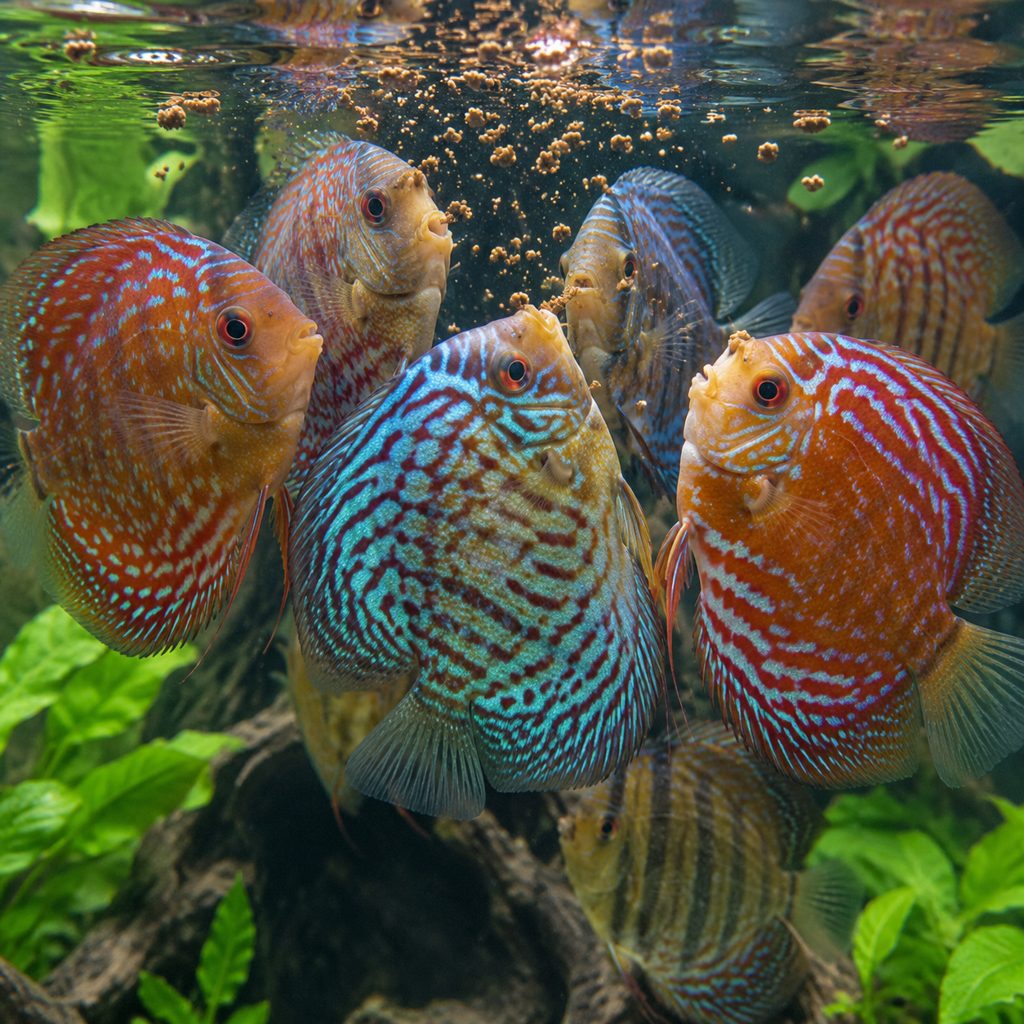
Discus have a strong appetite, and food can become one of the biggest recurring costs of keeping them. The trick is to offer enough for growth and body condition without leaving a mess in a warm aquarium. A dependable formulated food makes a useful base; frozen foods add variety, while live prey and rich homemade mixes need more caution.
Build meals around formulated food
| Food type | Examples | How to use it |
|---|---|---|
| Prepared food | Discus-specific granules or formulated diets | Convenient, stores well, and works as a staple |
| Frozen food | Bloodworms, brine shrimp (Artemia) | Thaw first; offer as variety or supplement |
| Homemade food | Beef-heart-based mix | Rich, but can foul water quickly |
| Live food | Live bloodworms and similar prey | Avoid because of parasite and bacterial risks |
Formulated discus food is an easy everyday foundation. Frozen bloodworms and brine shrimp are often readily accepted, but feeding only one frozen item can leave the diet unbalanced. Beef-heart mix is available in the US discus trade, but availability is not a recommendation to use it as a staple. It can add organic waste, so treat it as an optional food and keep a close eye on water quality.
Live foods may carry parasites or bacteria. Frozen products reduce some handling risks compared with live prey, but freezing does not sterilize food or eliminate every pathogen concern. Buy from a reputable source, thaw portions in the refrigerator, discard the thaw liquid, and avoid letting food sit warm before feeding.
Portion size and feeding frequency
Start with small meals two to four times daily, aiming for an amount the fish can finish within five minutes. If food remains, reduce the next portion and remove leftovers promptly. If every bit disappears immediately, increase the next serving only slightly. Discus may beg even after a meal; judge the portion by the fish and the tank, not by their enthusiasm.
Frequency shifts with age and growth:
- Juveniles: Offer high-protein food 3–4 times a day or more. Keep water warm at 86–88°F (30–31°C), and match increased feeding with more frequent water-quality checks and changes.
- Subadults: Feed 2–3 times daily and adjust portions as the fish grow.
- Adults: Feed 2–3 times daily, prioritizing body condition and clean water.
Smaller, repeated meals are easier to manage than a single large feeding. Remove uneaten food rather than allowing it to decay on the bottom. A steady routine at the same time and place can also help fish become comfortable approaching the keeper.
Buying food in the US
Specialist online retailers sell discus granules, frozen foods, and freeze-dried foods. One US discus retailer listed a discus granule food at $22 in October 2026. Its frozen jumbo bloodworm listing showed $11–$110 depending on package size, and a 1 lb frozen garlic beef-heart mix was listed at $16.50. These are individual listing prices, not typical per-meal costs or a broad market survey. Compare package size, shipping, and freezer space before ordering; food listings can be sold in large quantities.
Check the label for storage and feeding directions, and keep frozen food properly frozen until you portion it. If you switch foods, mix the new item in gradually with the familiar food. A sudden change may make fish refuse a meal, especially when they are already settling into a new aquarium.
Keep the feeding plan tied to water quality
Extra food means extra waste. Juvenile tanks can dirty quickly because frequent meals and growth go together. Test water and maintain a water-change routine appropriate to the fish load. If ammonia or nitrite appears, or nitrate climbs, reduce wasted food and review the biofilter and maintenance schedule rather than simply adding more filtration media. Our article on discus water changes explains how feeding load can affect the work routine.
A healthy adult can usually manage a short trip of a few days without being fed. Do not compensate with a large meal before leaving, and avoid adding unfamiliar food while you are away. For longer absences, arrange a reliable caretaker who can give measured portions and remove leftovers.
FAQ
My discus stopped eating. What should I check first?
Check temperature and water quality, then look for changes in surroundings or recent food changes. A new fish may refuse food for 2–3 days. Keep portions small and watch breathing, color, and behavior; persistent symptoms deserve prompt investigation.
Can I feed frozen bloodworms as the only food?
That is not a good plan. Bloodworms may be eagerly eaten, but they can leave the diet unbalanced. Use a formulated discus food as the staple and frozen bloodworms as a supplement.
Is beef heart required for discus?
No. It is sold by some US specialist retailers, but it is not mandatory and can make water dirty. Use it only if it suits your feeding plan, and remove leftovers promptly.
How often should I feed adults?
Two to three small meals a day is a practical target for adults. Juveniles generally need 3–4 or more meals daily. In either case, aim for the food to be gone within five minutes.
‹ Back to all articles