 The Discus | Discus Fish Care and Breeding Guide
Discus Water Parameters: Temperature, pH, and Hardness
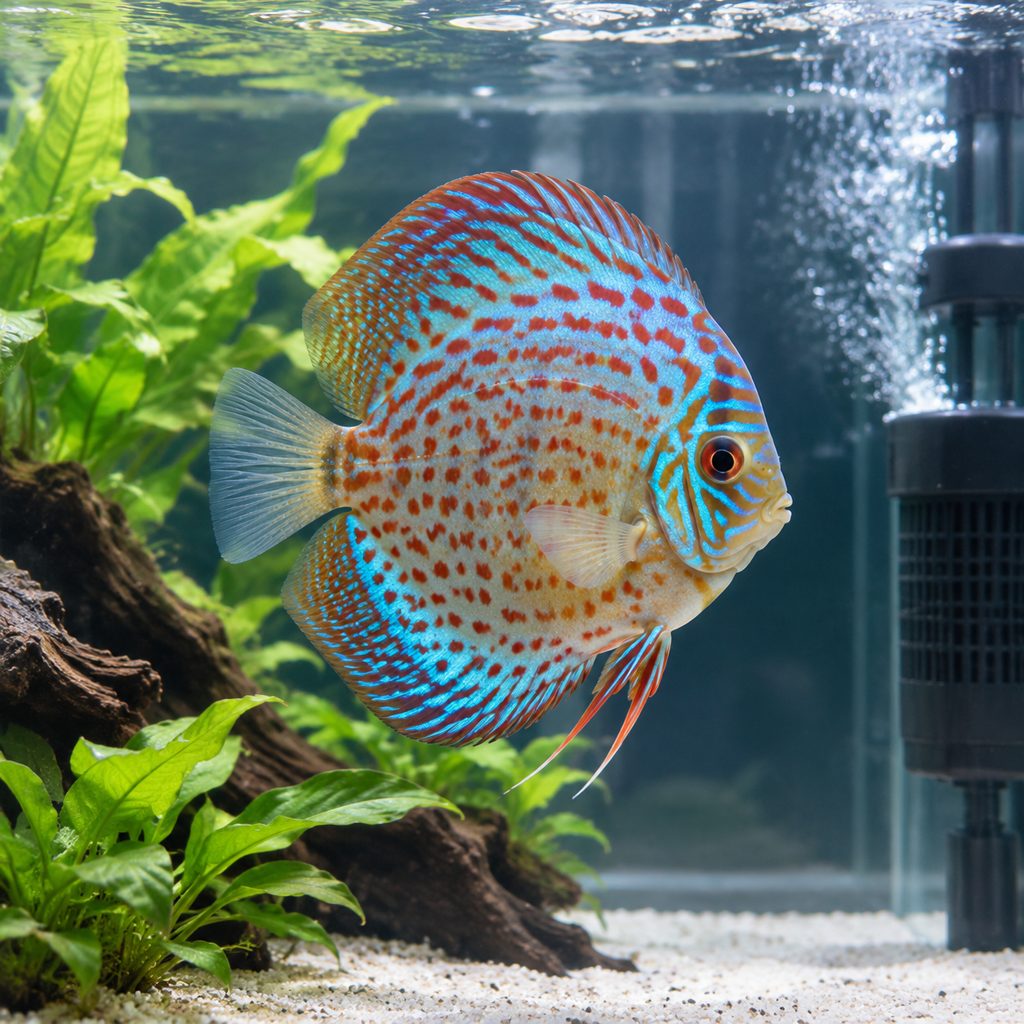
Discus do best when the water stays predictable. They come from warm Amazonian waters, eat generously, and can live more than 10 years with good care. Temperature, pH, hardness, and nitrogen waste all matter, but stability matters more than chasing a perfect number. Start with the fish you have: domesticated strains and wild fish may need different chemistry, and US tap water varies by utility.
Start with the fish and its water history
Discus are South American cichlids in the genus Symphysodon. Adults commonly reach 6–8 inches (15–20 cm). Wild fish inhabit blackwater environments around pH 4.2–5.2 and 79–90°F (26–32°C). Those natural conditions are useful context, not an instruction to force every aquarium to that pH. Many domesticated strains adapt to near-neutral water. A stable aquarium is generally safer than repeatedly chasing a number with chemicals.
For everyday adult care, use 82–86°F (28–30°C) as a working temperature range. Growing juveniles are commonly kept at 86–88°F (30–31°C). A brief 88–90°F (31–32°C) treatment may suit specific cases, but it is not a universal cure. Confirm the temperature is appropriate for the suspected problem and fish, and increase aeration because warm water holds less oxygen. Use a reliable heater and thermostat to avoid overnight dips. When adjusting the set point, keep the change to about 2°F (1°C) in a day rather than making a sudden jump.
| Water measure | Domesticated strains | Breeding or wild-type fish |
|---|---|---|
| pH | 6.0–7.0 | 5.0–6.5 |
| GH (general hardness) | 1–5°dH | 1–5°dH |
| KH (carbonate hardness) | Measure and manage for your source water | Measure and manage for your source water |
These are useful targets, not a reason to make abrupt corrections. Check source and aquarium water, including KH because it affects how readily pH shifts. If your tap water sits just above pH 7.0, a healthy domesticated discus may tolerate it; stability matters more than a quick chemical adjustment. Wild fish and breeding setups call for more deliberate planning, so ask the seller about the fish’s established water conditions.
Keep nitrogen waste in check
- Ammonia and nitrite should remain at zero.
- Test nitrate regularly; below 20 mg/L is a practical management aim.
A mature biofilter processes ammonia and nitrite. If either registers, investigate promptly: the filter may be immature or undersized for the waste load, the tank may be overstocked, or feeding may exceed what the system can process. Nitrate is less toxic, but it accumulates. The 20 mg/L mark is a guideline, not a universal safety ceiling. If nitrate rises above it, review water-change volume and frequency, stocking, and food portions.
Feed consistently, remove leftovers, and keep water changes regular. Test ammonia, nitrite, and pH routinely; include nitrate and KH in your maintenance checks. Record readings so you can spot a trend rather than reacting to one test. Our article on discus water changes covers preparing replacement water and matching temperature.
A US tap-water note
Do not assume municipal water means chlorine only. The EPA reports that more than one in five Americans receives chloramine-treated water, so check your utility’s water-quality report and choose a conditioner labeled for the disinfectant in your supply. Seachem’s US instructions for Prime, for example, state a standard dose of 5 mL per 50 US gallons (200 L) and address ammonia released when chloramine is treated. That dose applies to that product’s instructions, not every conditioner. See our article on chlorine and dechlorinators for a closer look.
Reverse osmosis is another option if your source water is unsuitable or inconsistent, but RO water needs remineralization before it is used for fish. A US discus specialist listed a Breeder’s Grade RO unit at $150 in October 2026; that is one retailer’s price, not a market average. The same specialist maintains separate hybrid and wild discus listings, so both types are offered by at least one domestic seller. Availability does not mean their water needs are interchangeable.
FAQ
Can I keep discus if my tap pH is a little over 7.0?
Many domesticated fish can do well near neutral, but check the fish’s history and prioritize stability. Avoid forcing pH down quickly. Measure KH and compare aquarium water with replacement water.
Should I keep adults hotter than 86°F?
Not as a routine target. Keep adults around 82–86°F (28–30°C). Higher temperatures are for juvenile growth or a short, carefully selected treatment—not everyday care for every fish.
Do wild discus need different water?
Often, yes. A pH range of 5.0–6.5 is a useful starting reference for wild or breeding fish, with soft water around GH 1–5°dH. Ask about the fish’s established conditions and make changes gradually.
‹ Back to all articles